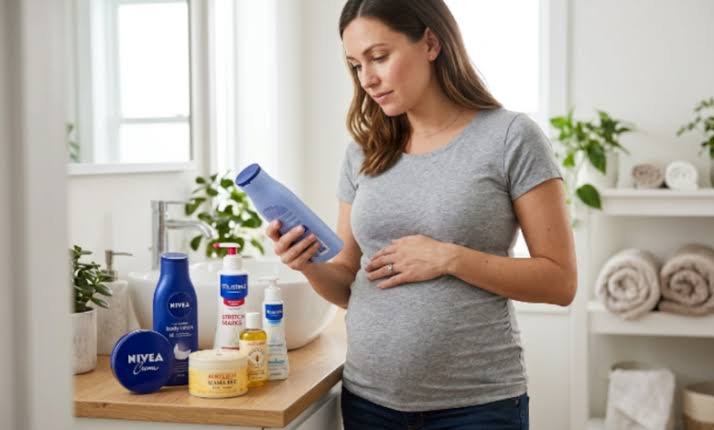
I’m a pregnant woman. Are Nivea products safe compared to Burt’s Bees or Mustela? Pregnancy can turn a simple skincare purchase into a surprisingly complicated decision. If you are thinking, the short answer is that you should compare the specific product and its ingredient list rather than assume an entire brand is automatically pregnancy-safe.
Nivea, Burt’s Bees, and Mustela all sell moisturizers, cleansers, body products, and other skincare items, but their formulas can differ substantially from one product to another. Mustela also has a dedicated maternity range, while Burt’s Bees emphasizes naturally derived ingredients and Nivea offers products designed for different skin types and concerns.
For most pregnant people, the practical approach is to focus on the ingredients and intended use of the individual product. The U.S. Food and Drug Administration (FDA) also advises consumers with pregnancy-related cosmetic concerns to discuss them with their healthcare provider and notes that cosmetic ingredient lists can help consumers identify ingredients they may wish to avoid.
Is Nivea Safe to Use During Pregnancy?
There is no simple rule that says all Nivea products are either safe or unsafe during pregnancy.
Nivea makes a very large range of skincare products, including body lotions, creams, facial moisturizers, cleansers, sunscreens, and specialized treatments. Because formulas vary, pregnancy safety needs to be considered at the individual-product level.
For example, Nivea’s U.S. guidance specifically discusses body-cleansing products for sensitive skin during pregnancy and recommends options such as NIVEA Creme Care Shower, Creme Soft Shower, and Sensitive Balance Shower.
That does not mean every Nivea product is appropriate for every pregnant person. A moisturizer designed simply to hydrate dry skin is a different consideration from a treatment product containing an active ingredient.
The safest habit is to check the complete ingredient list before adding a new product to your routine.
How Does Nivea Compare With Burt’s Bees and Mustela?
The three brands have different approaches to skincare.
Nivea is a broad skincare brand with products for many everyday needs. Its pregnancy suitability depends heavily on the particular formula.
Burt’s Bees focuses heavily on naturally derived ingredients. The company says most of its fragrances are naturally derived from proprietary blends of essential oils and extracts, and individual product pages provide detailed ingredient lists.
Mustela has a dedicated maternity collection specifically designed for pregnancy and postpartum skincare. Mustela states that its maternity products are designed for use during pregnancy and that its maternity range avoids ingredients including parabens, phthalates, and phenoxyethanol.
This distinction can make Mustela particularly straightforward for someone who wants a product specifically formulated and marketed for pregnancy. However, “made for pregnancy” does not mean that every Mustela product outside the maternity range should automatically be treated the same way.
Mustela Has a Dedicated Pregnancy Skincare Range
One of the clearest differences among these brands is that Mustela specifically develops products for pregnancy and maternity.
Its U.S. maternity collection includes products for concerns such as dry skin and stretch marks. Mustela says its maternity products are safe for mothers and developing babies and that the collection contains between 96% and 100% ingredients of natural origin under the ISO 16128 standard.
For example, the company’s fragrance-free Stretch Marks Cream lists ingredients such as glycerin, shea butter, avocado oil, avocado protein, and vitamin E.
Another Mustela maternity lotion is described by the company as having no added fragrance and being tested under dermatological and gynecological control.
These characteristics may appeal to someone who wants a pregnancy-specific moisturizer, particularly if fragrance has become irritating during pregnancy.
Still, ingredient labels remain important because formulas can change over time.
What About Burt’s Bees During Pregnancy?
Burt’s Bees products can also be considered on an individual basis rather than as one single category.
The company provides ingredient lists for its individual products and states that ingredients are listed according to INCI conventions.
One example is Burt’s Bees Hydrating Face & Body Cream with Aloe and Coconut Oil. The current U.S. product listing describes it as fragrance-free and formulated for sensitive skin. Its ingredient list includes glycerin, jojoba oil, coconut oil, aloe, beeswax, and other ingredients.
This illustrates why reading the label is more useful than relying solely on a brand’s reputation.
“Natural,” “plant-based,” or “clean” does not automatically mean a product is appropriate for every pregnancy. Conversely, the presence of a synthetic ingredient does not automatically make a cosmetic unsafe.
The actual ingredient, concentration, method of use, amount applied, frequency, and available safety evidence all matter.
What Ingredients Should Pregnant Women Watch For?
Pregnancy does not mean you need to eliminate every ingredient from your skincare cabinet. However, several ingredients deserve particular attention.
Retinoids and Retinol
Topical retinoids are among the most important ingredients to avoid during pregnancy.
The American Academy of Dermatology recommends avoiding retinoids during pregnancy, including prescription retinoids and over-the-counter skincare containing retinol.
If you see ingredients such as retinol or other retinoid medications in a product, check with your obstetrician or dermatologist before using it.
This is particularly important when comparing anti-aging or acne products rather than basic moisturizers.
Hydroquinone
Hydroquinone is another ingredient that deserves caution during pregnancy.
The American Academy of Dermatology recommends avoiding hydroquinone during pregnancy.
The FDA also warns about risks associated with skin-lightening products containing hydroquinone and mercury, emphasizing that pregnant people should avoid exposure to these products.
If a product is marketed for skin lightening, brightening, I’m a pregnant woman. Are Nivea products safe compared to Burt’s Bees or Mustela? or pigmentation treatment, inspect the active ingredients particularly carefully.
Salicylic Acid
Salicylic acid requires more nuance than simply labeling it “unsafe.”
The American College of Obstetricians and Gynecologists lists topical salicylic acid among certain over-the-counter ingredients that can be used during pregnancy.
The American Academy of Dermatology, however, recommends discussing salicylic acid with your obstetrician or dermatologist, particularly because higher concentrations and different methods of use can change the risk considerations.
So if you are using a cleanser or treatment containing salicylic acid, consider the product’s concentration, application area, frequency, and whether it is actually necessary for your skincare routine.
Fragrance and Essential Oils
Fragrance is a somewhat different issue.
A fragrance ingredient is not automatically a pregnancy hazard simply because it has a scent. However, pregnancy can make skin more sensitive, and some people find fragranced products irritating.
For that reason, fragrance-free products can be a practical choice if you develop sensitivity, itching, redness, or nausea around strongly scented products.
This is one area where individual Burt’s Bees, Nivea, and Mustela formulas can differ considerably.
Burt’s Bees states that most of its fragrances are naturally derived from essential oils and extracts.
Meanwhile, some Mustela maternity products are specifically offered without added fragrance.
Is “Natural” Better for Pregnancy?
Not necessarily.
Natural ingredients can be perfectly useful in skincare, but “natural” is not a medical definition of pregnancy safety.
Essential oils, botanical extracts, fragrances, and other naturally derived ingredients can still irritate sensitive skin or have properties that require consideration.
The better question is:
What exactly is in this product, how is it being used, and is there good safety information for pregnancy?
This approach also prevents the opposite mistake: assuming that every synthetic ingredient is dangerous.
Skincare formulation is more complicated than a simple natural-versus-chemical comparison.
What Should a Pregnancy-Safe Skincare Routine Look Like?
For many pregnant people, skincare can remain relatively simple.
Start With a Gentle Cleanser
A mild cleanser can remove sweat, oil, sunscreen, and makeup without unnecessarily irritating the skin.
ACOG recommends washing the face twice daily with a mild cleanser and lukewarm water when managing pregnancy-related acne.
If your skin has become unusually sensitive, consider choosing a fragrance-free formula.
Use a Basic Moisturizer
A straightforward moisturizer can help with dryness and tightness.
Look for a formula that your skin tolerates well rather than choosing solely according to brand name. Ingredients such as glycerin, ceramides, oils, and emollients can help support the skin barrier.
Protect Your Skin From the Sun
Pregnancy can be associated with melasma, sometimes called the “mask of pregnancy.” Sun protection is therefore an important part of maintaining an uncomplicated skincare routine.
If you are unsure about a particular sunscreen ingredient or product, discuss your options with your healthcare provider or dermatologist.
Avoid Unnecessary Treatment Products
If you do not need a strong acne, anti-aging, bleaching, or exfoliating treatment, pregnancy may be a good time to simplify your routine.
The fewer unnecessary products you use, the easier it is to identify what might be causing irritation.
What About Stretch-Mark Creams?
Stretch marks are common during pregnancy, and many products claim to prevent them.
However, ACOG notes that there is no proof that treatments can prevent stretch marks completely. A heavy moisturizer may help keep skin soft, but it does not necessarily prevent stretch marks from developing.
This is important when evaluating products from Nivea, Burt’s Bees, Mustela, or any other brand.
A moisturizer can be useful for comfort and hydration without being a proven treatment for preventing stretch marks.
Mustela’s maternity products are specifically formulated for pregnancy and include stretch-mark products, but the company’s own clinical claims should be distinguished from the broader medical evidence regarding whether stretch marks can be completely prevented.
Which Brand Should a Pregnant Woman Choose?
There is no universal winner because the comparison depends on what you actually need.
If your priority is a simple everyday moisturizer, a suitable Nivea or Burt’s Bees product may be perfectly reasonable when its ingredient list fits your needs.
If you prefer naturally derived ingredients, Burt’s Bees offers many formulas built around that approach, although individual ingredients still need to be checked.
If you want a product specifically developed for pregnancy and maternity, Mustela’s dedicated maternity range offers a straightforward option because the brand explicitly identifies those products for pregnancy use.
The important distinction is that this is not really a competition between three brands. It is a comparison between individual formulas, ingredients, intended uses, and your own skin’s needs during pregnancy.
A Simple Way to Check Any Skincare Product During Pregnancy
Before buying or applying a new product, use this five-step check:
1. Read the Full Ingredient List
Do not rely only on the front of the package or terms such as “natural,” “clean,” or “dermatologist tested.”
2. Identify Active Ingredients
Pay particular attention to retinoids, retinol, hydroquinone, and acne-treatment ingredients.
3. Consider Why You Are Using It
A basic body lotion has a different purpose from a prescription-strength acne treatment or skin-lightening product.
4. Consider Your Skin’s Sensitivity
Pregnancy can change how your skin reacts to products. A fragrance-free moisturizer may be preferable if you are experiencing irritation or increased sensitivity.
5. Ask Your Healthcare Provider When You’re Unsure
The FDA recommends discussing pregnancy-related cosmetic concerns with a healthcare provider.
This is particularly important for prescription products, concentrated treatments, products with multiple active ingredients, or anything you use over large areas of skin.
Frequently Asked Questions
Are Nivea products safe during pregnancy?
Many everyday Nivea skincare products may be suitable during pregnancy, but safety should be assessed by checking the ingredients and intended use of the specific product. Nivea has published guidance addressing certain body-cleansing products for sensitive skin during pregnancy.
Is Burt’s Bees safe during pregnancy?
There is no single answer for the entire Burt’s Bees product range. Individual products have different formulas, so check the ingredient list and discuss any questionable active ingredients with your healthcare provider. Burt’s Bees provides detailed ingredient information on its product pages.
Is Mustela safe during pregnancy?
Mustela states that its maternity products are designed for pregnancy and are safe for mothers and developing babies. Its broader product range should still be evaluated individually.
Is retinol safe during pregnancy?
The American Academy of Dermatology recommends avoiding retinoids, including retinol, during pregnancy.
Can I use salicylic acid while pregnant?
ACOG lists topical salicylic acid among certain over-the-counter ingredients that may be used during pregnancy. However, the American Academy of Dermatology recommends discussing salicylic acid with your healthcare provider, particularly because concentration and usage matter.
Is fragrance-free skincare better during pregnancy?
Fragrance-free products can be helpful if pregnancy has made your skin more sensitive or reactive. They are not automatically required for every pregnant person, but they can simplify a routine and reduce potential irritation.
Is natural skincare automatically safer during pregnancy?
No. Natural ingredients are not automatically safer simply because they come from plants. The complete formula, dose, route of exposure, and available safety information all matter.
Can I use my normal moisturizer while pregnant?
Often, a basic moisturizer can remain part of a pregnancy skincare routine. Check its ingredients, especially if it contains active treatments rather than simply moisturizing ingredients.
What should I do if I accidentally used a product containing retinol before realizing I was pregnant?
Do not panic. Stop using the product and discuss the specific product and exposure with your obstetrician or another qualified healthcare professional. They can assess your individual situation rather than relying on a general rule.
How can I choose between Nivea, Burt’s Bees, and Mustela?
Start with the purpose of the product and its ingredient list. If you want a pregnancy-specific product, Mustela’s maternity line is explicitly designed for that use. If you prefer Burt’s Bees or Nivea, evaluate the individual formula rather than assuming the entire brand is pregnancy-safe.
Final Thoughts
If you’re pregnant and wondering whether Nivea products are safe compared with Burt’s Bees or Mustela, the most useful answer is to look beyond the brand name.
Nivea offers a broad selection of everyday skincare products, Burt’s Bees emphasizes naturally derived formulations, and Mustela has a dedicated maternity collection designed around pregnancy and postpartum needs.
For pregnancy, however, the specific formula I’m a pregnant woman. Are Nivea products safe compared to Burt’s Bees or Mustela? matters more than the logo on the bottle. Check the ingredient list, be especially cautious with retinoids and hydroquinone, consider fragrance sensitivity, and ask your obstetrician or dermatologist about products containing active treatments or ingredients you’re unsure about.
A simple, gentle routine is often all you need. During pregnancy, choosing products based on ingredients and evidence—not marketing labels alone—is a practical way to care for your skin while giving yourself greater peace of mind.







1 thought on “I’m a pregnant woman. Are Nivea products safe compared to Burt’s Bees or Mustela?”
Comments are closed.