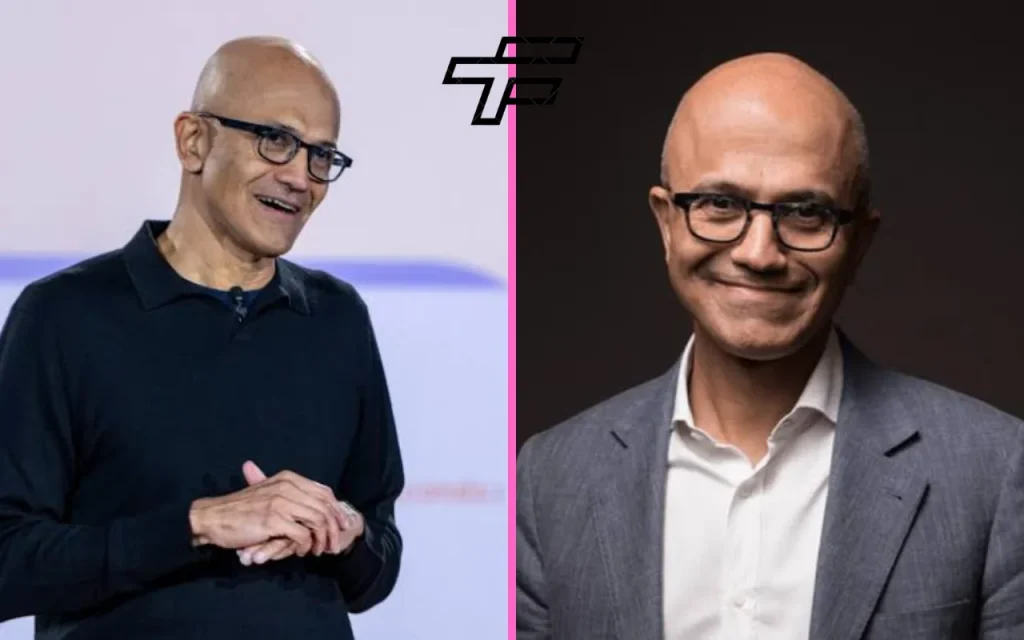
The modern business world is changing faster than ever. Artificial intelligence, electric mobility, cloud computing, automation, and digital transformation are influencing how companies operate and compete. Behind these changes are executives who must balance innovation, business performance, customer expectations, and long-term strategy.
Two prominent names in this conversation are Oliver Zipse and Satya Nadella. Although they lead companies in different industries, their professional journeys offer interesting perspectives on modern corporate leadership.
Oliver Zipse is closely associated with BMW and the transformation of the global automotive industry. Satya Nadella, meanwhile, has become one of the most influential technology executives through his leadership at Microsoft.
The connection between Oliver Zipse and Satya Nadella is not necessarily a direct business partnership. Rather, their significance comes from the different approaches they represent to technological progress, organizational change, and competition in a rapidly evolving global economy.
Understanding their backgrounds and leadership priorities provides a useful way to examine where business and technology may be heading.
Who Is Oliver Zipse?
CV Oliver Zipse, Chairman of the Board of Management of BMW AG
Oliver Zipse is a German business executive and mechanical engineer best known for his long career at BMW Group, one of the world’s leading premium automobile manufacturers.
Born in Heidelberg, Germany, Zipse developed an educational background combining engineering, computer science, mathematics, and business management. He studied mechanical engineering at the Technical University of Darmstadt, computer science and mathematics at the University of Utah, and earned an Executive MBA through programs associated with Kellogg and WHU.
He joined BMW in 1991 as a trainee and gradually moved through several important positions within the company. His experience included development, production, production planning, and corporate strategy.
In August 2019, Zipse became Chairman of BMW’s Board of Management, a position equivalent to chief executive officer. During his tenure, he helped guide the company through major changes in the automotive market, including the expansion of electric vehicles and the development of BMW’s next-generation vehicle platform.
Oliver Zipse’s Departure From BMW
An important detail for readers researching Oliver Zipse is that he is no longer BMW’s chief executive.
On May 13, 2026, BMW announced that Zipse would hand over the chairmanship to Milan Nedeljković, who assumed the position on May 14, 2026. His departure followed 35 years with the company.
Zipse’s leadership period was particularly significant because BMW had to respond to changing customer expectations, stricter environmental requirements, competition from electric vehicle manufacturers, and advances in automotive software.
His experience demonstrates how traditional manufacturing companies must adapt without losing the engineering standards and brand identity that made them successful. BMW Group Newsroom+2
Who Is Satya Nadella?
Satya Nadella Talks to Adam Grant about the Future of Work
Satya Nadella is an Indian-born American business executive who serves as Chairman and Chief Executive Officer of Microsoft.
Born in Hyderabad, India, Nadella developed an early interest in technology and engineering. He earned a bachelor’s degree in electrical engineering from Mangalore University, a master’s degree in computer science from the University of Wisconsin–Milwaukee, and an MBA from the University of Chicago.
Before joining Microsoft, he worked at Sun Microsystems. He joined Microsoft in 1992 and spent years working in different technology and business divisions.
His professional experience included online services, enterprise software, server technologies, and cloud infrastructure.
In February 2014, Nadella became Microsoft’s CEO. His appointment marked an important period in the company’s development, as Microsoft increasingly focused on cloud computing, subscription-based software, artificial intelligence, and enterprise technology.
Satya Nadella’s Impact on Microsoft
One of Nadella’s most important contributions has been helping Microsoft strengthen its position in cloud computing.
Under his leadership, Microsoft expanded Azure, developed its cloud-based business ecosystem, and increased its focus on services that support businesses across different industries.
He also encouraged a cultural shift toward collaboration, continuous learning, and customer-focused innovation.
Microsoft’s investments in artificial intelligence have become another defining part of his leadership. The company’s work across AI infrastructure, enterprise tools, developer platforms, and productivity software reflects its ambition to make advanced technology more accessible.
As of October 2026, Nadella remains Microsoft’s Chairman and CEO. SEC+2
Oliver Zipse and Satya Nadella: What Connects These Two Business Leaders?
The interest in Oliver Zipse and Satya Nadella comes from the opportunity to compare two executives who have influenced major global industries.
They do not lead the same type of organization. Zipse built his reputation in automotive manufacturing, while Nadella developed his career in software, cloud computing, and enterprise technology.
There is no established public evidence of a major direct partnership or joint business venture between the two executives. Their relevance as a pair is better understood through their different approaches to technological transformation.
Several important themes connect their professional stories.
1. A Shared Focus on Technological Innovation
Innovation has been central to both executives’ careers.
For Zipse, innovation involved developing vehicles that could compete in a changing automotive market. This included electric mobility, production efficiency, vehicle architecture, and the integration of digital technologies.
For Nadella, innovation has involved expanding cloud infrastructure, improving software platforms, and supporting the development and adoption of artificial intelligence.
Their industries are different, but the underlying business challenge is similar: companies must continually improve their products and services to remain competitive.
2. Managing Change in Established Organizations
Large companies often face a difficult challenge when introducing new technologies. They must modernize their operations without disrupting the systems, employees, and customer relationships that support their existing businesses.
BMW had to balance traditional vehicle engineering with electric mobility and digital development.
Microsoft had to evolve beyond its historical dependence on traditional software products and become a major provider of cloud-based services and AI technologies.
Both examples demonstrate that successful transformation requires more than introducing new products. It also involves changing organizational priorities, investing in new capabilities, and preparing employees for different ways of working.
3. Maintaining Competitiveness in Global Markets
BMW competes against established automakers and newer electric vehicle manufacturers. Microsoft faces competition from major technology companies, cloud providers, AI developers, and enterprise software businesses.
These competitive environments require long-term planning.
Companies cannot depend entirely on their historical reputation. They must understand customer expectations, respond to market developments, and make investments that support future growth.
Zipse and Nadella approached these challenges from different industries, but both illustrate the importance of strategic flexibility.
Leadership Styles: Oliver Zipse vs. Satya Nadella
Leadership styles can influence everything from employee performance to investment decisions and product development.
Although neither executive can be fully understood through a few public characteristics, their professional backgrounds provide useful insights into their management approaches.
| Leadership factor | Oliver Zipse | Satya Nadella |
|---|---|---|
| Main industry | Automotive manufacturing | Technology and software |
| Professional background | Engineering and production | Computer science and business |
| Major focus | Mobility and vehicle innovation | Cloud computing and AI |
| Organizational challenge | Automotive transformation | Digital transformation |
| Strategic priority | Manufacturing flexibility | Technology platforms and services |
| Global influence | Automotive industry | Global technology ecosystem |
Oliver Zipse: Engineering and Operational Leadership
Zipse’s career at BMW gave him extensive experience in the operational side of a major manufacturing business.
His background in production and technical planning was particularly relevant as BMW expanded its electric vehicle portfolio and modernized its manufacturing processes.
Manufacturing leadership requires attention to several interconnected factors:
- Product quality and reliability.
- Supply chain stability.
- Production costs and efficiency.
- Engineering development.
- Customer demand and market conditions.
- Long-term investment decisions.
Zipse’s professional journey highlights the importance of combining technical knowledge with commercial decision-making.
Satya Nadella: Technology and Organizational Leadership
Nadella’s career demonstrates the importance of combining technical understanding with organizational development.
His experience in cloud infrastructure helped prepare him for Microsoft’s transition toward cloud-based business models.
His leadership also emphasized collaboration and a learning-oriented corporate culture.
This approach is particularly important in technology businesses, where products, customer expectations, and competitive advantages can change rapidly.
Rather than relying exclusively on existing software products, Microsoft expanded its focus toward integrated services and platforms.
How the Automotive and Technology Industries Are Becoming Connected
One of the most interesting aspects of comparing Oliver Zipse and Satya Nadella is the increasing relationship between the automotive and technology industries.
Cars are no longer defined exclusively by engines, mechanical components, and physical design. Modern vehicles increasingly depend on software, connectivity, computing systems, data processing, and digital services.
At the same time, technology companies are expanding their involvement in industries that traditionally operated outside the software sector.
This creates opportunities for collaboration between automakers, technology providers, semiconductor manufacturers, and artificial intelligence developers.
Artificial Intelligence in the Automotive Industry
Artificial intelligence is changing how vehicles are designed, manufactured, maintained, and operated.
Some important applications include:
Driver assistance: AI-powered systems can analyze road conditions, identify objects, and support drivers through advanced safety features.
Predictive maintenance: Data analysis can help manufacturers and vehicle owners identify potential mechanical problems before they become more serious.
Manufacturing automation: Intelligent systems can support quality inspections, production planning, and industrial robotics.
In-car experiences: Voice recognition and intelligent digital assistants can make vehicle interfaces more responsive and convenient.
These developments show why the automotive industry increasingly depends on advanced computing capabilities.
Cloud Computing and Connected Vehicles
Cloud computing is another important area connecting automotive manufacturing with the technology sector.
Connected vehicles can generate and exchange information through digital networks. Depending on the vehicle’s design and available services, this information can support navigation, diagnostics, software updates, and other connected features.
Cloud platforms can also help automotive companies manage large amounts of operational data.
For technology providers such as Microsoft, these developments create opportunities to supply enterprise infrastructure, data management, and software solutions.
However, connected vehicles also introduce important considerations involving cybersecurity, data privacy, network reliability, and regulatory compliance.
Electric Vehicles and Digital Transformation
The transition toward electric mobility is not simply a change in vehicle powertrains.
Electric vehicles require new approaches to battery management, energy efficiency, software integration, charging infrastructure, and supply chain management.
Digital technologies can help manufacturers monitor performance, improve production processes, and develop more personalized customer experiences.
BMW’s Neue Klasse development program represents an important part of the company’s next-generation vehicle strategy.
For Microsoft, the broader opportunity lies in providing technologies that help industrial companies manage increasingly complex digital operations.
These developments illustrate how automotive engineering and information technology are becoming more interconnected.
What Businesses Can Learn From Oliver Zipse and Satya Nadella
The careers of these executives provide several useful lessons for business owners, managers, entrepreneurs, and aspiring corporate leaders.
Their experiences also demonstrate that successful leadership is not limited to one particular industry.
1. Continuous Innovation Is Essential
Businesses that depend entirely on past success may struggle when customer expectations or market conditions change.
Zipse’s experience at BMW illustrates the importance of adapting an established manufacturing business to new mobility technologies.
Nadella’s Microsoft leadership demonstrates how an established technology company can expand into new markets and business models.
For smaller businesses, the same principle applies.
Companies should regularly evaluate their products, services, internal processes, and customer experience to identify areas where improvement is necessary.
2. Technical Knowledge Must Be Combined With Business Strategy
Understanding technology is valuable, but business leaders must also understand how technological investments support commercial objectives.
A company might introduce an advanced system, but that investment only creates meaningful value when it solves a real problem or improves an important business process.
For example, an automobile manufacturer investing in artificial intelligence should consider production quality, safety, operational efficiency, and customer satisfaction.
Similarly, a software company developing new AI capabilities must consider reliability, security, usability, and customer demand.
The strongest strategies connect technical innovation with measurable business needs.
3. Organizational Culture Matters
Large organizations cannot transform successfully through executive decisions alone.
Employees, engineers, developers, production teams, and business managers all contribute to the implementation of new strategies.
Nadella’s emphasis on collaboration and learning at Microsoft highlights the importance of organizational culture.
In manufacturing environments, operational coordination and technical expertise are equally important.
Business leaders should encourage employees to develop new skills, communicate across departments, and participate in continuous improvement.
4. Long-Term Planning Requires Flexibility
Strategic planning is essential, but businesses must avoid becoming too rigid.
Automotive manufacturers face changing regulations, consumer preferences, energy requirements, and international competition.
Technology companies face rapidly evolving software markets, security challenges, new competitors, and changing customer expectations.
Both environments require leaders to make decisions with incomplete information while remaining prepared to adjust their strategies.
5. Global Competition Requires Customer Awareness
A successful company must understand that customers in different regions may have different needs.
An automotive manufacturer may need to consider differences in charging infrastructure, purchasing power, regulations, and driving conditions.
A technology company must consider local business requirements, data regulations, language preferences, and available infrastructure.
Global businesses therefore need strategies that combine international scale with an understanding of individual markets.
The Future of Leadership: Lessons From Two Different Industries
The comparison between Oliver Zipse and Satya Nadella offers a broader perspective on the future of corporate leadership.
Traditional industry boundaries are becoming less distinct. Automotive manufacturers increasingly operate as technology-driven businesses, while technology providers are becoming important participants in industrial transformation.
This shift creates several challenges for future executives.
Balancing Innovation With Financial Performance
Companies must invest in research, development, and emerging technologies while maintaining financial discipline.
Not every new technology produces immediate commercial returns. Leaders must determine which investments support long-term competitiveness and which introduce unnecessary financial risks.
Building Trust Through Responsible Technology
As businesses collect more data and introduce increasingly intelligent systems, responsible technology management becomes essential.
Privacy, cybersecurity, transparency, and regulatory compliance are important considerations.
For Microsoft, these issues are relevant to cloud services and artificial intelligence.
For automotive companies, they are increasingly relevant to connected vehicles, software systems, and driver assistance technologies.
Preparing Employees for New Skills
Automation and artificial intelligence are changing workplace responsibilities.
Employees may need new capabilities in software development, data analysis, cybersecurity, digital operations, and advanced manufacturing.
Organizations that invest in employee development can become better prepared for technological change.
The experiences of Zipse and Nadella show why leadership increasingly requires a combination of industry knowledge, technological awareness, and the ability to guide people through change.
Are Oliver Zipse and Satya Nadella Connected Through Microsoft and BMW?
This is an important question for anyone searching for Oliver Zipse and Satya Nadella together.
Both executives have been associated with major international corporations, and BMW and Microsoft operate in areas where technology and business increasingly overlap.
However, their shared interest in innovation should not be confused with evidence of a direct professional relationship.
There is no established public announcement confirming that Zipse and Nadella entered into a major joint venture, strategic partnership, or formal collaboration with each other.
BMW may work with technology companies and external suppliers, while Microsoft provides cloud and software solutions to businesses across numerous industries. These broader industry relationships do not automatically establish a personal partnership between the two executives.
For accurate research, it is important to distinguish between corporate technology developments, company-level collaborations, and individual executive relationships.
This distinction makes the comparison more informative and avoids creating misleading conclusions.
What Is Oliver Zipse Doing After Leaving BMW?
After ending his 35-year career at BMW in May 2026, Zipse moved on from the company’s Board of Management.
His professional background remains relevant to discussions about automotive engineering, industrial production, international business strategy, and corporate leadership.
His biography published by Airbus identifies him as a non-executive director. His experience in engineering, production, and corporate management provides a foundation for contributing to board-level discussions in another major industrial organization. Airbus+1
His departure also represents a significant leadership transition for BMW, with Milan Nedeljković taking responsibility for the company’s next phase.
Frequently Asked Questions
1. Who are Oliver Zipse and Satya Nadella?
Oliver Zipse is a German business executive and former Chairman of BMW’s Board of Management. Satya Nadella is an Indian-born American business executive and the Chairman and CEO of Microsoft.
2. Are Oliver Zipse and Satya Nadella business partners?
There is no established public evidence confirming a direct business partnership or major joint venture between the two executives. They are primarily compared because of their influence on different industries.
3. Is Oliver Zipse still the CEO of BMW?
No. Oliver Zipse handed over his position on May 13, 2026. Milan Nedeljković became BMW’s Chairman of the Board of Management on May 14, 2026.
4. Is Satya Nadella still the CEO of Microsoft?
Yes. As of October 2026, Satya Nadella continues to serve as Microsoft’s Chairman and Chief Executive Officer.
5. What is Oliver Zipse known for?
Zipse is best known for his long career at BMW, where he held several senior positions before becoming Chairman of the Board of Management in 2019. His leadership included BMW’s transformation toward electric mobility and next-generation vehicle technologies.
6. What is Satya Nadella famous for?
Nadella is widely recognized for leading Microsoft’s transformation toward cloud computing, enterprise services, and artificial intelligence. He became Microsoft’s CEO in February 2014.
7. What industries do Oliver Zipse and Satya Nadella represent?
Zipse represents the automotive and manufacturing industries, while Nadella represents the technology, software, cloud computing, and artificial intelligence sectors.
8. How are BMW and Microsoft connected?
BMW and Microsoft operate in an increasingly connected business environment where cloud computing, software, data management, and artificial intelligence can support industrial operations. However, this broader relationship should not be interpreted as proof of a direct partnership between Zipse and Nadella.
9. What leadership lessons can businesses learn from these executives?
Businesses can learn the importance of continuous innovation, employee development, customer awareness, long-term planning, operational efficiency, and adapting to technological change.
10. Why are people searching for Oliver Zipse and Satya Nadella together?
The keyword brings together two internationally recognized business executives. Their different professional backgrounds create an interesting opportunity Oliver Zipse and Satya Nadella to compare leadership, innovation, digital transformation, and the changing relationship between traditional industries and technology companies.
Conclusion
Oliver Zipse and Satya Nadella represent two different but increasingly interconnected areas of the global business landscape. Zipse built his reputation through decades of experience in automotive engineering and corporate leadership at BMW, while Nadella has helped Microsoft strengthen its position in cloud computing, enterprise technology, and artificial intelligence.
Their professional journeys demonstrate that successful leadership requires more than maintaining an established business. It involves recognizing technological opportunities, understanding customer expectations, developing employees, and making strategic decisions that prepare organizations for the future.
Although there is no confirmed major direct partnership between the two executives, comparing their careers provides valuable insight into how innovation is reshaping traditional industries and modern technology companies.
Ultimately, the stories of Oliver Zipse and Satya Nadella highlight an important lesson for businesses worldwide: long-term success depends on the ability to adapt, innovate, and turn technological progress into meaningful value.





1 thought on “Oliver Zipse and Satya Nadella How Two Global Leaders Are Shaping the Future of Business and Technology”
Comments are closed.