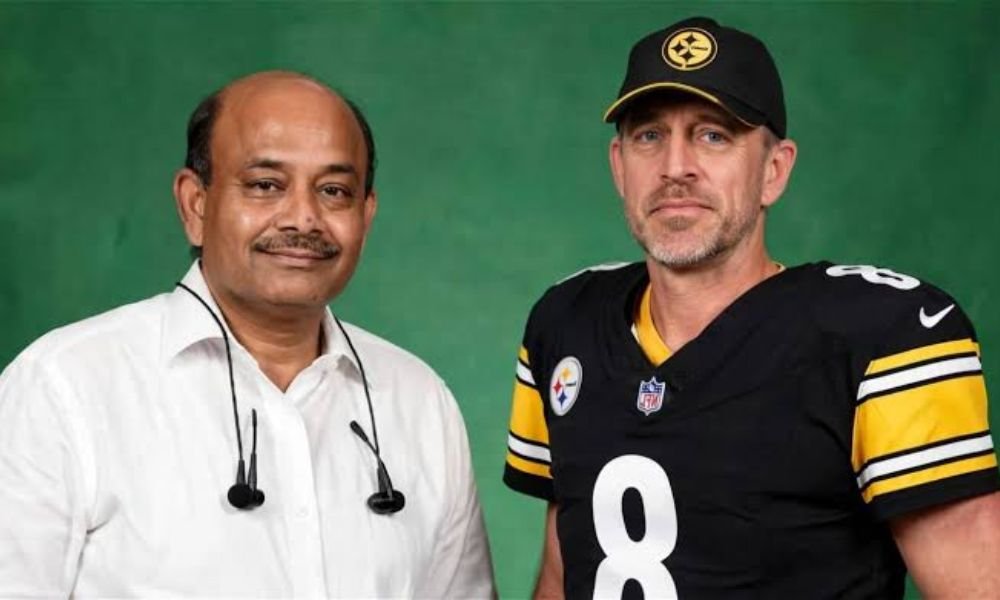
Aaron Rodgers and Radhakishan Damani are recognized in very different professional worlds. Rodgers has built his reputation as one of the most accomplished quarterbacks in modern American football, while Damani has become a prominent Indian investor and business entrepreneur associated with the retail chain DMart. Although their careers developed in different countries and industries, both offer interesting examples of how long-term planning, calculated decisions, and consistent performance can shape professional success.
The connection between Aaron Rodgers and Radhakishan Damani is not an established business partnership or a widely documented personal relationship. Rather, the two figures offer an opportunity to explore different approaches to achievement, wealth creation, public recognition, and professional longevity.
Understanding their backgrounds helps explain why they attract attention and what their careers can teach people interested in sports, entrepreneurship, investing, and leadership.
Who Are Aaron Rodgers and Radhakishan Damani?
Before comparing their achievements, it is useful to understand the professional backgrounds that made each person well known.
Aaron Rodgers: An Accomplished NFL Quarterback
Aaron Rodgers is an American professional football quarterback who became widely known through his career with the Green Bay Packers. Selected by Green Bay in the first round of the 2005 NFL Draft, he spent many seasons developing into one of the league’s most recognizable players.
Rodgers is particularly known for his passing accuracy, ability to read defensive formations, and decision-making under pressure. He won Super Bowl XLV with the Packers following the 2010 season and was named the game’s Most Valuable Player.
His individual accomplishments also include multiple NFL Most Valuable Player awards. These achievements helped establish his reputation as an elite quarterback and made him a major figure in American professional sports.
Beyond his on-field performance, Rodgers has attracted attention through endorsements, interviews, and public discussions about his career and personal interests.
Radhakishan Damani: An Investor and Retail Entrepreneur
Radhakishan Damani is an Indian billionaire investor and entrepreneur best known for founding Avenue Supermarts, the company that operates DMart supermarkets.
Damani initially established himself in India’s investment markets before expanding into organized retail. His business approach became closely associated with value-oriented shopping, operational efficiency, and a focus on keeping costs under control.
DMart built its position by offering everyday consumer products at competitive prices while emphasizing disciplined store operations. Its model has appealed to customers looking for affordable groceries, household supplies, and other essential goods.
Unlike athletes whose professional performance is visible during games, Damani’s influence is primarily reflected in investment decisions, business strategy, company development, and long-term ownership.
His relatively private public profile also contrasts with the media attention that typically surrounds prominent American sports figures.
Aaron Rodgers and Radhakishan Damani: Comparing Their Career Journeys
At first glance, comparing an NFL quarterback with an Indian retail entrepreneur might seem unusual. Their professions involve different skills, audiences, and measures of success. However, their careers reveal several interesting similarities when viewed through the lens of professional development.
Building Expertise Over Time
Rodgers developed his football skills through years of preparation, competition, and experience. After being selected by Green Bay in 2005, he spent his early NFL years learning behind veteran quarterback Brett Favre before becoming the team’s starting quarterback in 2008.
That transition illustrates an important aspect of elite sports: talent can create opportunities, but preparation and readiness help determine whether an athlete can take advantage of them.
Damani followed a different route. His early experience in the investment world helped him develop an understanding of business valuation, consumer behavior, and financial risk. He later applied that experience to building a retail business.
The broader lesson is that expertise often develops through several stages. Early experiences may not immediately produce visible success, but they can provide knowledge that becomes valuable later.
Making Decisions Under Pressure
Professional football requires quarterbacks to make decisions in seconds. Rodgers has had to assess defensive formations, recognize changes before the snap, and determine where to throw the ball while defenders attempt to disrupt the play.
Business leaders face a different kind of pressure. Investment decisions may involve uncertain economic conditions, changing consumer preferences, and the possibility of losing substantial capital.
Damani’s career illustrates the importance of evaluating opportunities carefully rather than relying exclusively on short-term excitement. His transition from investing to retail also demonstrates how knowledge gained in one field can inform decisions in another.
Neither profession eliminates uncertainty. Success depends partly on recognizing risks, understanding available information, and adjusting when circumstances change.
How Aaron Rodgers Built His Reputation in the NFL
Rodgers’ career provides a useful example of the relationship between individual ability, team performance, and sustained professional relevance.
Major Career Achievements
Rodgers won Super Bowl XLV with the Green Bay Packers and earned Super Bowl MVP honors. He also received multiple NFL MVP awards, reflecting his performance over several regular seasons.
His playing style has been associated with accuracy, mobility within the pocket, and the ability to create opportunities when a passing play breaks down.
These qualities helped him become one of the defining quarterbacks of his generation. His career also illustrates the physical and mental demands of professional football, where players must prepare extensively for opponents while adapting to injuries, roster changes, and evolving offensive systems.
Moving Beyond Green Bay
Rodgers’ departure from Green Bay marked a major transition. He joined the New York Jets in 2023, but an Achilles tendon injury in his first regular-season game with the team sharply limited that chapter of his career.
He later joined the Pittsburgh Steelers, bringing his experience to another franchise. His continued presence in the NFL has kept attention on his performance, leadership, and ability to compete as a veteran quarterback.
His career shows that professional success is not always a straight line. Even established athletes must navigate setbacks and changing circumstances.
For younger athletes, one important takeaway is that preparation matters both before a major opportunity and after an unexpected setback.
How Radhakishan Damani Built His Business Reputation
Damani’s career offers a different perspective on professional success, particularly for people interested in investing, retail, and entrepreneurship.
From Investing to Retail
Before becoming widely known for DMart, Damani established himself in India’s stock market. His experience as an investor helped shape his interest in consumer businesses and the economics of everyday spending.
He founded the business that became Avenue Supermarts, and the first DMart store opened in Powai, Mumbai, in 2002.
Rather than positioning the company primarily as a premium shopping destination, DMart emphasized affordability and operational discipline. Its focus on everyday consumer needs helped establish a recognizable retail proposition.
The strategy also highlighted the importance of understanding a market before committing resources to expansion.
Why DMart’s Business Model Attracts Attention
Retail is a competitive industry in which customers can compare prices, product availability, convenience, and service. A business must manage these factors while covering rent, staffing, inventory, distribution, and other operating expenses.
DMart’s approach emphasizes value-conscious shopping and cost control. The company has become a significant participant in India’s organized retail sector.
For entrepreneurs, the useful insight is not that every business should copy a supermarket chain. Instead, it is that a clear customer proposition can guide many smaller operational decisions.
A business promising affordable essentials must pay attention to purchasing costs, inventory management, store operations, and pricing. Those decisions reinforce one another.
Aaron Rodgers’ Net Worth vs. Radhakishan Damani’s Net Worth
Searches involving Aaron Rodgers and Radhakishan Damani may also reflect curiosity about their wealth. Both have achieved substantial financial success, but their sources of income differ significantly.
Aaron Rodgers’ Sources of Wealth
Rodgers’ wealth has been associated with several sources, including:
- NFL salaries and signing bonuses.
- Contract incentives and other performance-related compensation.
- Commercial endorsements and sponsorship agreements.
- Investment opportunities and other business interests.
Professional football contracts can be extremely valuable, particularly for quarterbacks who maintain a high level of performance. However, contract totals do not necessarily equal money received immediately or personal net worth.
Taxes, agent fees, living expenses, investment returns, and other financial obligations all influence an athlete’s actual wealth.
For this reason, online estimates of Rodgers’ net worth should be treated cautiously unless they clearly explain their methodology and the date of the estimate.
Radhakishan Damani’s Sources of Wealth
Damani’s wealth is closely associated with his investments and ownership interests, particularly his connection to Avenue Supermarts, the publicly traded company behind DMart.
Unlike an athlete who receives compensation under a playing contract, a business owner or investor can accumulate wealth through the value of company shares and other assets.
That distinction is important because the value of publicly traded holdings can change with market prices. A billionaire’s estimated net worth may rise or fall even when the person has not sold any assets or received an equivalent amount in cash.
Damani’s financial position is also influenced by the performance and valuation of his broader investment holdings.
Why Their Wealth Is Difficult to Compare Directly
A direct comparison between Rodgers and Damani must account for the different ways their fortunes are created.
Rodgers’ career earnings are connected primarily to professional sports and related commercial opportunities. Damani’s wealth is more closely linked to business ownership and investments.
Their financial circumstances also reflect different currencies, tax systems, markets, and economic environments.
Consequently, a simple comparison of online net worth estimates may be interesting, but it does not fully explain either person’s financial position or professional achievement.
What Their Careers Teach Us About Leadership
Although Rodgers and Damani operate in different industries, their experiences offer several lessons about leadership and professional development.
1. Preparation Creates Better Opportunities
For an NFL quarterback, preparation includes studying opponents, practicing plays, and building coordination with teammates. For an entrepreneur, it may involve studying customers, reviewing financial information, and evaluating operational risks.
Preparation cannot guarantee success, but it can improve the quality of decisions when opportunities arise.
A practical application is to identify the skills that matter most in your profession and build a consistent routine around improving them.
2. Long-Term Thinking Matters
A single football game does not define an entire career, just as one profitable quarter does not establish the long-term health of a business.
Rodgers’ career spans multiple seasons, teams, and challenges. Damani’s transition from investing to retail involved developing a business over many years.
Both examples encourage a broader perspective: evaluate progress over an appropriate period rather than allowing one result to determine your entire assessment.
3. Adaptability Is Essential
Sports teams change coaches, teammates, and offensive systems. Businesses must respond to competitors, shifting customer preferences, and economic conditions.
Professionals who can reassess their approach when circumstances change may be better positioned to remain effective.
Adaptability does not mean abandoning every established principle. It means understanding which methods remain useful and which need to evolve.
4. Reputation Is Built Through Repeated Performance
Rodgers established his reputation through high-level play across numerous seasons. DMart developed its market position by repeatedly delivering on its value-focused retail proposition.
In either setting, a reputation is strengthened when performance aligns with expectations over time.
For an individual professional, this could mean consistently meeting deadlines, communicating clearly, and delivering reliable work. For a business, it could mean maintaining product quality and honoring its pricing and service commitments.
What Makes Their Stories Relevant to Different Audiences?
The comparison is useful because it brings together two distinct forms of achievement.
Sports fans may be interested in Rodgers’ career milestones, contracts, leadership, and longevity in the NFL. Business readers may focus on Damani’s investment history, DMart’s development, and the role of cost discipline in retail.
Entrepreneurs can draw lessons from both careers without assuming that the same tactics will work in every environment.
For example, a small business owner might learn from Rodgers’ preparation by studying customer needs before an important presentation. The same owner might learn from Damani’s retail approach by reviewing operating costs before expanding into a new market.
These are not identical professional challenges, but the underlying principles—preparation, judgment, consistency, and adaptation—apply across many fields.
Frequently Asked Questions
Are Aaron Rodgers and Radhakishan Damani related?
There is no widely documented evidence establishing a family relationship between Aaron Rodgers and Radhakishan Damani. Rodgers is an American football player, while Damani is an Indian investor and entrepreneur.
Have Aaron Rodgers and Radhakishan Damani worked together?
No widely documented business partnership or professional collaboration between the two has been established. They are known for separate careers in American football and Indian business.
Who is Aaron Rodgers?
Aaron Rodgers is an American NFL quarterback known for his career with the Green Bay Packers, his Super Bowl XLV victory, and his multiple NFL MVP awards. He has also played for the New York Jets and Pittsburgh Steelers.
Who is Radhakishan Damani?
Radhakishan Damani is an Indian investor and entrepreneur best known for founding DMart through Avenue Supermarts. He developed a reputation in India’s investment markets before expanding into organized retail.
How did Radhakishan Damani make his money?
Damani accumulated wealth through investing and business ownership. His association with Avenue Supermarts, the company operating DMart stores, is a major component of his financial profile.
Is Aaron Rodgers richer than Radhakishan Damani?
Publicly reported wealth estimates generally place Damani in a substantially higher wealth category because of his business and investment holdings. However, estimates vary by source and date, so comparisons should use clearly dated, credible figures.
What is the main difference between their careers?
Rodgers built his career through professional football, earning compensation for athletic performance and related commercial opportunities. Damani developed his wealth through investment activity and entrepreneurship, particularly his involvement in the retail industry.
What can entrepreneurs learn from Aaron Rodgers?
Entrepreneurs can learn from the importance of preparation, rapid decision-making, teamwork, and adapting to changing circumstances. These qualities are relevant to managing projects and responding to unexpected business challenges.
What can investors learn from Radhakishan Damani?
His career highlights the importance of understanding business fundamentals, evaluating opportunities carefully, and paying attention to operating costs. However, his results do not guarantee that the same investment approach will work for other people.
Why are people interested in comparing sports stars and billionaires?
These comparisons help readers explore different routes to achievement, financial success, and public influence. They also reveal how the sources of wealth, professional risks, and measures of success differ between sports and business.
Conclusion
Aaron Rodgers and Radhakishan Damani represent two distinct approaches to professional achievement. Rodgers became a prominent NFL quarterback through athletic ability, preparation, and years of competition. Damani developed his reputation through investing and the creation of a value-focused retail business.
There is no established direct connection between the two, but comparing their careers offers a useful perspective on success across different industries.
Their experiences demonstrate that professional achievement can take many forms. Whether someone is pursuing a career in sports, building a business, or developing expertise in another field, preparation, informed decisions, adaptability, and consistent performance remain valuable principles.
Ultimately, the most useful lesson from their stories is not that one career path is superior to another. It is that lasting professional progress depends on understanding your field, making thoughtful decisions, and continuing to learn as circumstances evolve.






1 thought on “Aaron Rodgers and Radhakishan Damani Two Different Paths to Success”
Comments are closed.