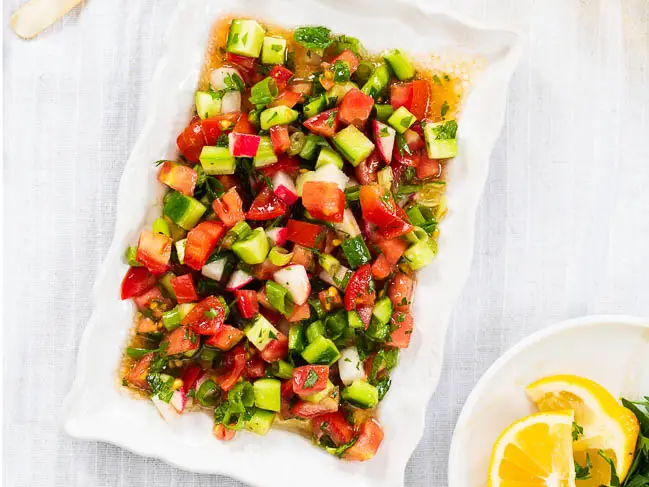
When searching for coban salatasi near me, you may be looking for something simple, fresh, and full of flavor to complement your meal. This traditional Turkish salad is known for its combination of ripe tomatoes, crisp cucumbers, onions, fresh herbs, olive oil, and lemon juice. It offers a refreshing balance to grilled meats, kebabs, flatbreads, and other Mediterranean-inspired dishes.
Coban salatasi, also spelled çoban salatası, translates to “shepherd’s salad” in English. It is a popular part of Turkish cuisine and is appreciated for its straightforward ingredients and bright, natural flavors. Unlike salads built around heavy dressings or large amounts of cheese, this dish lets fresh vegetables take center stage.
Across the United States, people can look for this salad at Turkish restaurants, Mediterranean eateries, and establishments specializing in Middle Eastern or Eastern Mediterranean food. However, availability varies by restaurant, so knowing what to look for can make your search easier.
Whether you want a refreshing side dish with grilled kebabs, a light lunch, or a new addition to your Mediterranean food experience, understanding this traditional salad can help you find a version worth trying.
What Is Coban Salatasi?
Coban salatasi is a traditional Turkish salad made primarily with finely chopped fresh vegetables. Its familiar ingredients include tomatoes, cucumbers, onions, green peppers, parsley, olive oil, and lemon juice.
The recipe is valued for its simplicity. Rather than relying on a complicated dressing, it combines the natural sweetness of ripe tomatoes, the crispness of cucumbers, the sharpness of onions, and the acidity of citrus.
Some restaurants add red wine vinegar, sumac, or other seasonings, depending on their preferred preparation. Recipes can also differ between households and regions of Turkey.
The result is a colorful, refreshing salad that pairs particularly well with grilled and roasted foods.
Why Is It Called Shepherd’s Salad?
The name çoban salatası literally means shepherd’s salad in Turkish. The dish reflects a practical approach to cooking with readily available vegetables and simple seasonings.
Although the precise history of the recipe can vary in popular accounts, its defining characteristics are easy to understand: fresh produce, minimal preparation, and ingredients that work well together.
These qualities have helped make it a familiar accompaniment to many Turkish meals.
What Makes It Different From Other Mediterranean Salads?
Coban salatasi is sometimes compared with Greek salad, Israeli salad, and other chopped vegetable salads. While these dishes share ingredients, their flavors and traditional preparations differ.
Greek salad, for example, often includes feta cheese and olives, with larger pieces of vegetables. Coban salatasi typically emphasizes finely chopped tomatoes, cucumbers, onions, peppers, and a light lemon-and-olive-oil dressing.
The distinction is not absolute. Restaurant recipes can overlap, and some American establishments adapt traditional dishes to local preferences.
How to Find Coban Salatasi Near Me in the United States
Finding authentic Turkish Coban Salatasi Near Me with choosing the right search terms and checking restaurant menus before visiting.
Search for Turkish Restaurants Nearby
A Turkish restaurant is often the most direct place to look for çoban salatası. Restaurants serving kebabs, pide, lahmacun, and other Turkish specialties may offer it as a side dish or appetizer.
Search phrases that may help include:
- “Coban salatasi near me”
- “Çoban salatası near me”
- “Turkish salad near me”
- “Authentic Turkish restaurant near me”
- “Turkish kebab restaurant near me”
- “Mediterranean chopped salad near me”
Try searching with and without Turkish characters. Some restaurant menus use the original spelling, while others use the simplified spelling “coban salatasi” or the English name “shepherd salad.”
Check Restaurant Menus Before You Go
Not every Turkish restaurant serves the salad every day, and some menus may list it under a different name.
Look for descriptions mentioning chopped tomatoes, cucumbers, onions, green peppers, parsley, lemon, and olive oil. These ingredients can help you identify the dish even if the menu uses an English translation.
If the menu is unclear, contact the restaurant and ask whether it serves traditional Turkish shepherd’s salad.
It is also worth checking whether the salad is available as an individual side, a shared appetizer, or part of a mixed grill platter.
Explore Mediterranean and Middle Eastern Restaurants
If no Turkish restaurant nearby offers the dish, consider Mediterranean restaurants that prepare fresh chopped vegetable salads.
Some Lebanese, Greek, and other Middle Eastern or Eastern Mediterranean establishments serve salads with overlapping ingredients. However, similar salads are not necessarily traditional çoban salatası.
Ask about the preparation if authenticity matters to you. A restaurant may be able to explain whether its salad follows a Turkish recipe or is a regional variation.
Use Reviews to Evaluate Freshness
Customer reviews can offer useful clues about a restaurant’s food quality, but look for specific observations rather than relying only on an overall rating.
Reviews mentioning crisp vegetables, fresh herbs, balanced seasoning, and well-prepared kebabs may help you identify places worth investigating. Recent photographs can also show how the restaurant presents its salads.
Remember that online reviews are subjective. A highly rated restaurant may still prepare the salad differently from what you prefer.
What Ingredients Should You Expect in Authentic Coban Salatasi?
The best-known version of Turkish shepherd’s salad uses a small collection of fresh ingredients. Their quality and proportions make a noticeable difference in the finished dish.
Tomatoes
Ripe tomatoes provide sweetness, acidity, color, and moisture. They also contribute to the light dressing that forms naturally when tomato juices combine with lemon juice and olive oil.
Firm but ripe tomatoes are generally easier to chop neatly without becoming mushy.
Cucumbers
Cucumbers add crunch and a refreshing flavor. English cucumbers or other varieties with relatively small seeds can work well, although the choice depends on availability and personal preference.
Fresh cucumbers should feel firm rather than soft or watery.
Onions
Red or white onions provide a sharp, savory contrast to the tomatoes and cucumbers. They are usually chopped finely so their flavor spreads throughout the salad without overwhelming every bite.
Some cooks briefly rinse chopped onions to soften their sharpness.
Green Peppers and Parsley
Green peppers add a mild vegetal flavor and extra crunch. Fresh parsley contributes an herbal note that complements the lemon dressing.
The type of pepper may vary. Some recipes use mild green peppers, while others incorporate varieties that provide a little more heat.
Olive Oil and Lemon Juice
Extra-virgin olive oil adds richness, while fresh lemon juice brightens the vegetables. Salt and black pepper help bring the flavors together.
Some versions also use vinegar or sumac. These additions can be enjoyable, but they are not necessary for a simple, traditional preparation.
How Should Good Coban Salatasi Taste?
A well-prepared shepherd’s salad should taste fresh, balanced, and vibrant.
The tomatoes should be juicy without making the salad excessively watery. Cucumbers should remain crisp, onions should contribute flavor without dominating, and the lemon dressing should complement the vegetables rather than overpower them.
Olive oil should provide a gentle richness instead of making the salad greasy.
Freshness is particularly important because the recipe contains few ingredients. When the vegetables are bland, bruised, or overripe, there is little seasoning to hide their shortcomings.
Signs of a Freshly Prepared Salad
When evaluating a restaurant’s version, consider these characteristics:
- Vegetables look fresh and retain their color.
- Cucumbers have a crisp texture.
- Tomatoes are ripe without appearing mushy.
- Herbs look fresh rather than wilted.
- The dressing tastes bright and balanced.
- The salad does not sit in an excessive amount of liquid.
Some tomato juice at the bottom of the bowl is normal. However, a large pool of liquid combined with limp vegetables may suggest that the salad was prepared too early or held for too long.
What Foods Pair Well With Turkish Shepherd’s Salad?
One reason this salad appears on Turkish restaurant menus is its versatility. Its refreshing flavor can balance dishes that are smoky, rich, savory, or heavily seasoned.
Grilled Kebabs
Adana kebab, shish kebab, and other grilled meat dishes pair naturally with coban salatasi. The vegetables and lemon dressing provide a fresh contrast to the charred flavor of grilled meat.
The salad can also complement chicken kebabs and grilled lamb.
Pide and Lahmacun
Turkish pide is a boat-shaped flatbread that can contain cheese, meat, vegetables, or other toppings. Lahmacun is a thin flatbread traditionally topped with a seasoned meat mixture.
A serving of shepherd’s salad adds crunch and freshness alongside either dish.
Rice, Bulgur, and Grilled Vegetables
Coban salatasi works well with rice pilaf, bulgur, grilled eggplant, and other vegetable-based sides.
Its light texture provides variety when the rest of the meal contains several warm, cooked components.
Vegetarian and Vegan Meals
The traditional combination of vegetables, olive oil, lemon juice, and herbs is generally suitable for vegetarian and vegan diets.
It can accompany hummus, lentil soup, stuffed vegetables, grilled eggplant, and flatbread. If you follow a strict dietary plan, confirm the ingredients and preparation methods with the restaurant.
Is Coban Salatasi a Healthy Choice?
Turkish shepherd’s salad can be a nutritious addition to a balanced meal. Its main ingredients are fresh vegetables, which provide water, fiber, vitamins, minerals, and a variety of naturally occurring plant compounds.
Olive oil contributes unsaturated fats, while lemon juice adds flavor without requiring a heavy dressing.
The nutritional profile depends on portion size, ingredient proportions, and the amount of oil and salt used.
What About Calories?
The vegetables themselves are generally low in calories, but olive oil contributes a meaningful amount of energy even in relatively small servings.
Restaurant portions can vary considerably, so it is difficult to give one reliable calorie estimate for every version of the salad.
If you are monitoring calories, sodium, or fat intake, ask whether the restaurant can serve the dressing separately or use less oil and salt.
Is It Suitable for Different Dietary Preferences?
A traditional recipe is typically plant-based and does not require dairy, eggs, or meat. However, individual restaurants may modify the recipe or prepare it alongside other foods.
People with food allergies or specific dietary requirements should verify ingredients and cross-contact practices directly with the restaurant.
How Much Does Coban Salatasi Cost at a Restaurant?
The price of Turkish shepherd’s salad depends on the restaurant, city, portion size, and whether it is sold separately or included with another dish.
Some restaurants include a small salad with a kebab platter, while others charge separately for an appetizer-sized portion. Upscale restaurants may price it differently from casual neighborhood eateries.
For the most accurate price, check the current menu or contact the restaurant before ordering.
When comparing options, consider what the serving includes. A small side salad accompanying a full meal is different from a large portion intended for sharing.
It can also be useful to compare the cost of ordering the salad separately with choosing a combination meal that already includes vegetables and other sides.
Can You Make Coban Salatasi at Home?
Yes. Turkish shepherd’s salad is relatively easy to prepare at home because it requires no cooking and uses common grocery-store ingredients.
Making it yourself is also a practical alternative when nearby restaurants do not offer the dish.
Simple Turkish Shepherd’s Salad Recipe
Ingredients
- 2 medium ripe tomatoes
- 1 large cucumber
- 1 small red or white onion
- 1 small mild green pepper
- 2 tablespoons chopped fresh parsley
- 1–2 tablespoons extra-virgin olive oil
- 1 tablespoon fresh lemon juice
- Salt and black pepper to taste
Instructions
- Wash the vegetables and parsley thoroughly.
- Finely chop the tomatoes, cucumber, onion, and green pepper.
- Place the chopped vegetables in a mixing bowl and add the parsley.
- Drizzle with olive oil and lemon juice.
- Season with salt and black pepper.
- Toss gently and taste before serving.
Serve the salad soon after preparation for the best texture.
Tips for Better Flavor
Choose ripe tomatoes and fresh cucumbers. Cut the vegetables into similarly sized pieces so that each bite contains a balanced combination of ingredients.
Add the dressing shortly before serving. Salt draws moisture from vegetables, so leaving the dressed salad for too long can make it watery.
If you prefer a sharper flavor, add a little more lemon juice. If you enjoy a richer dressing, adjust the olive oil gradually rather than pouring in too much at once.
For a more traditional flavor profile, keep the seasoning simple and allow the vegetables to remain the main focus.
What to Know Before Ordering Coban Salatasi
Before ordering at a restaurant, a few practical considerations can help you get the experience you want.
Ask about portion size. Some menus list shepherd’s salad as a side, while others offer a larger appetizer portion.
Check the dressing. Lemon juice and olive oil are common, but recipes differ. Ask about vinegar, additional seasonings, or other ingredients if you have preferences.
Consider when it is prepared. Because chopped vegetables release moisture, a freshly assembled salad may have a crisper texture than one prepared well in advance.
Review the full meal. If you are ordering kebabs, flatbread, or a mixed grill, check whether a salad is already included.
Confirm current availability. Online menus can be outdated, and restaurants may change their offerings. A quick phone call can prevent an unnecessary trip.
Frequently Asked Questions About Coban Salatasi Near Me
What does coban salatasi mean in English?
Coban salatasi, properly written çoban salatası in Turkish, means “shepherd’s salad.” It is a traditional Turkish chopped vegetable salad usually made with tomatoes, cucumbers, onions, green peppers, parsley, olive oil, and lemon juice.
Where can I find Turkish shepherd’s salad near me?
Start by searching for Turkish restaurants, kebab shops, and Mediterranean restaurants in your area. Check online menus for “çoban salatası,” “coban salatasi,” or “shepherd’s salad,” and contact the restaurant to confirm availability.
Is coban salatasi the same as Greek salad?
No. Both salads feature fresh vegetables, but traditional Greek salad commonly includes feta cheese and olives and often uses larger vegetable pieces. Turkish shepherd’s salad typically emphasizes finely chopped tomatoes, cucumbers, onions, peppers, and a light dressing.
Is coban salatasi spicy?
Traditional coban salatasi is generally mild. Green peppers contribute flavor and crunch, but the dish does not necessarily contain hot peppers. Preparation varies, so ask the restaurant if you are sensitive to spice.
Is Turkish shepherd’s salad vegan?
The traditional recipe is generally vegan because it uses vegetables, herbs, olive oil, and lemon juice. Restaurant versions may differ, so check the ingredients and preparation methods if you follow a strict vegan diet.
Can I order coban salatasi as a main dish?
You can, although it is more commonly served as a side dish or appetizer. For a more substantial meal, pair it with hummus, lentils, grilled vegetables, chickpeas, or another protein-rich food.
What is the difference between coban salatasi and a regular garden salad?
Coban salatasi typically features finely chopped tomatoes, cucumbers, onions, green peppers, parsley, and a simple olive-oil-and-lemon dressing. A garden salad may include lettuce, carrots, cheese, croutons, or a wider range of commercial dressings.
Can coban salatasi be made without onions?
Yes. Although onions are common in the traditional preparation, you can leave them out or ask a restaurant whether it can customize the salad. The remaining vegetables, herbs, and dressing still provide plenty of flavor.
Is coban salatasi served cold?
It is usually served cool or at room temperature rather than hot. Freshly prepared vegetables help maintain the salad’s crisp texture and refreshing flavor.
How do I find authentic Turkish food in my area?
Look for restaurants that specialize in Turkish dishes such as kebabs, pide, lahmacun, lentil soup, and traditional vegetable sides. Read recent reviews, inspect menus, and ask how dishes are prepared if authenticity is important to you.
Conclusion
Searching for coban salatasi near me is a great starting point for discovering one of the simplest and most refreshing dishes in Turkish cuisine. Made with chopped tomatoes, cucumbers, onions, green peppers, fresh herbs, olive oil, and lemon juice, shepherd’s salad brings brightness and texture to a wide range of meals.
Turkish restaurants are often the best place to begin your search, although some Mediterranean eateries may offer similar preparations. Check menus, compare recent reviews, and confirm availability before visiting.
Whether you enjoy it alongside grilled kebabs, serve it with flatbread, or prepare it in your own kitchen, coban salatasi demonstrates how fresh ingredients and uncomplicated seasoning can create a satisfying dish.




1 thought on “Coban Salatasi Near Me How to Find Fresh Authentic Turkish Shepherd’s Salad”
Comments are closed.