Planning an event can be exciting, but the expenses can add up quickly. A venue, food, decorations, entertainment, invitations, rentals, transportation, and unexpected costs can turn a simple gathering into a major financial commitment.
That is why the idea behind start thriftyevents.net is particularly relevant to people who want to create enjoyable events while keeping spending under control. Thrifty event planning is not simply about choosing the cheapest option available. It is about deciding what matters most, spending strategically, and finding creative alternatives where expensive choices do not add meaningful value.
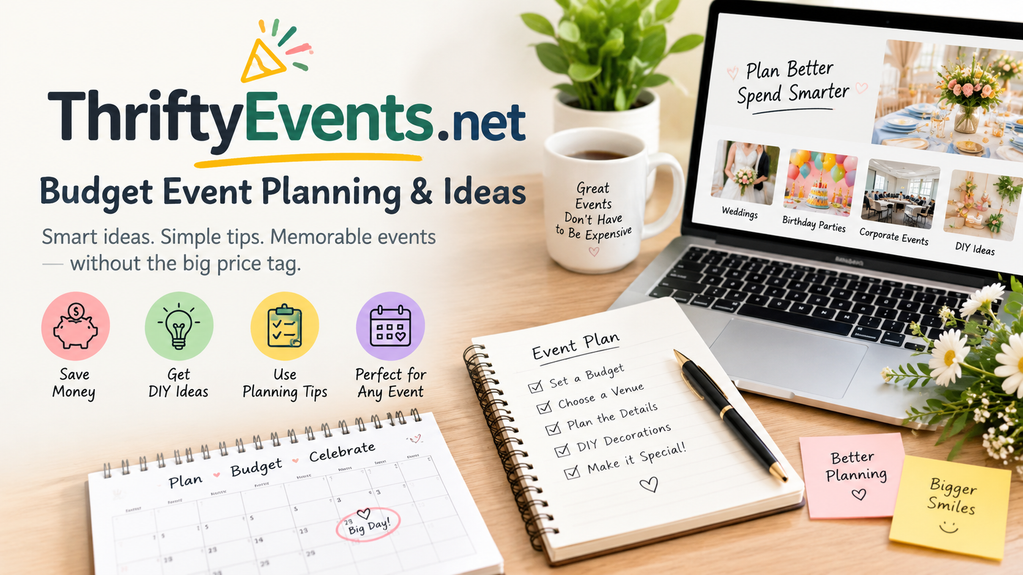
ThriftyEvents.net describes its focus around practical event planning, DIY projects, budgeting, and creative ways to organize celebrations without unnecessary spending.
Whether the occasion is a birthday party, family gathering, wedding-related celebration, community event, fundraiser, or small business function, the same principle applies: a successful event does not have to be an expensive event.
What Does Start ThriftyEvents.net Mean?
The phrase start thriftyevents.net can be understood as an entry point into affordable and practical event planning.
Instead of beginning with an unlimited list of things to buy, a thrifty approach starts with several basic questions:
What is the purpose of the event?
Who will attend?
What experience should guests have?
Which expenses are essential?
Which items can be created, borrowed, rented, reused, or eliminated?
This mindset changes the entire planning process. Rather than attempting to replicate an expensive event seen online, the host builds an event around realistic priorities and available resources.
The concept is particularly useful for people who want attractive and enjoyable celebrations without allowing event costs to become difficult to manage.
Why Budget-Friendly Event Planning Matters
A budget does more than limit spending. It gives an event structure.
Without a defined budget, hosts can make small purchases that appear reasonable individually but become expensive when combined. Decorations, food upgrades, extra rentals, printed materials, entertainment and last-minute purchases can gradually consume much more money than expected.
A clear spending plan helps prevent this problem.
It also encourages better decisions. If the venue is already consuming a large portion of the budget, for example, the host may decide that elaborate decorations are unnecessary. If food is the main priority, money can be redirected toward catering rather than decorative extras.
The objective is not to make an event look inexpensive. The objective is to make every dollar serve a purpose.
Start With an Event Budget
The first practical step is creating a realistic event budget.
Before contacting vendors or purchasing supplies, estimate the total amount you are comfortable spending. Then divide that amount into major categories.
Common categories include:
- Venue
- Food and beverages
- Decorations
- Entertainment
- Rentals
- Invitations and stationery
- Transportation
- Photography
- Activities
- Emergency expenses
The exact categories depend on the event.
A children’s birthday party might prioritize food, activities, decorations, and entertainment. A corporate gathering may place greater emphasis on the venue, audiovisual equipment, catering, and transportation.
Create a Small Emergency Fund
One of the most useful budget-planning habits is leaving room for unexpected expenses.
A missing decoration, additional food, replacement equipment, delivery charge, or last-minute guest can create an unnecessary financial headache.
Instead of allocating every dollar to planned purchases, keep part of the budget available for surprises.
That small reserve can make the planning process much less stressful.
Prioritize What Guests Actually Notice
Not every element of an event has the same impact.
Guests are more likely to remember whether they were comfortable, whether the food was enjoyable, whether the event flowed smoothly, and whether they felt welcomed than whether every decorative detail was expensive.
This creates an opportunity for smarter spending.
For example, a host might choose simple table decorations while investing more in comfortable seating and good food. Another organizer might use inexpensive decorations but spend more on an activity that gives guests something memorable to do.
The best budget decisions are based on guest experience rather than appearance alone.
Choose an Affordable Venue
Venue costs can have a major effect on an event budget.
Traditional event venues may offer convenience, but they are not always necessary. Depending on the occasion, consider community centers, public spaces, private homes, local halls, parks, libraries, nonprofit facilities, or other suitable locations.
Before choosing a venue, compare the complete cost rather than only the advertised rental price.
Ask about:
- Setup fees
- Cleanup fees
- Security deposits
- Furniture
- Parking
- Outside catering rules
- Equipment charges
- Time restrictions
- Overtime fees
A venue that appears inexpensive at first may become considerably more expensive after additional charges.
Save Money With DIY Decorations
DIY decorations are one of the most accessible ways to reduce event costs.
Simple materials can often be transformed into attractive decorations with a little creativity. Paper, fabric, recycled containers, inexpensive lighting, balloons, flowers, and existing household items can all have practical uses.
The key is not trying to make everything yourself.
Choose only projects that are genuinely cheaper or more personal when made at home. If a DIY project requires expensive materials, specialized equipment, and several hours of work, buying or renting the finished item may actually be more practical.
A good rule is to compare total DIY cost versus ready-made cost before committing.
Make Food Part of the Budget Strategy
Food is another major event expense, but there are several ways to control costs without making guests feel that something is missing.
For informal gatherings, buffet-style service can be more practical than individually plated meals. Potluck events can also work well for family and community gatherings when participation is appropriate.
Hosts can also simplify menus.
Instead of offering too many dishes, select a smaller number of crowd-friendly options and make sure portions are appropriate for the guest count.
For beverages, providing a few well-chosen options may be more economical than purchasing a large selection that guests barely touch.
The goal is not to provide the least expensive food possible. It is to avoid paying for unnecessary variety.
Use Local and Community Resources
A thrifty event does not have to be planned entirely alone.
Local businesses, community organizations, friends, family members, and neighborhood groups may provide useful resources or recommendations.
Someone may already own folding tables. A friend might have photography equipment. A local baker may offer a suitable option at a better price than a large commercial provider. A community organization may have an affordable venue.
Networking can therefore become a legitimate part of event budgeting.
It also gives smaller events a more personal and community-focused character.
Compare Vendors Before Booking
When professional services are necessary, do not automatically choose the first provider you find.
Compare several options and ask for clear pricing.
For each vendor, consider:
Total Cost
Look beyond the advertised starting price. Ask whether taxes, delivery, setup, service charges, deposits, or overtime fees apply.
Availability
A cheaper vendor is not useful if they cannot reliably meet the event schedule.
Included Services
Two vendors may charge similar prices but provide very different packages.
Cancellation Policies
Unexpected circumstances can change event plans. Understand the cancellation and refund terms before making a commitment.
Reviews and Reputation
Customer feedback can help identify recurring problems, but reviews should be evaluated critically rather than treated as absolute proof of quality.
Plan the Event Timeline Carefully
Good scheduling can also reduce costs.
A poorly organized event may require additional staff hours, extended venue rental, extra transportation, or unnecessary equipment.
Create a timeline covering:
- Setup
- Guest arrival
- Food service
- Activities
- Speeches or presentations
- Entertainment
- Cleanup
- Departure
Share the timeline with everyone responsible for an important part of the event.
When people understand their responsibilities beforehand, there is less chance of expensive last-minute confusion.
Consider Off-Peak Dates and Times
One of the simplest cost-saving strategies is flexibility.
Popular dates, weekends, holidays, and peak evening hours may be more expensive or harder to book.
If the event allows flexibility, compare different dates and times.
A weekday gathering, afternoon celebration, or event held outside a major holiday period may provide more affordable options.
This strategy is particularly useful when venue or vendor pricing changes according to demand.
Use Technology to Simplify Planning
Technology can make budget event planning easier.
A simple spreadsheet can track estimated and actual expenses. Digital invitations can reduce printing and postage costs for appropriate events. Online calendars can help coordinate vendors and volunteers.
A shared planning document can also allow several people to update responsibilities without repeatedly exchanging messages.
The technology itself does not need to be complicated. The objective is simply to maintain better organization.
Common Mistakes to Avoid
Even careful planners can make mistakes.
Spending Too Much on Appearance
Social media can create unrealistic expectations about what an event should look like. Trying to reproduce every detail from professionally produced events can quickly destroy a budget.
Forgetting Hidden Costs
Delivery, setup, cleanup, service fees, deposits, and taxes should be considered before finalizing a purchase.
Buying Too Early
Some supplies may be purchased before the guest count or event details are confirmed. This can lead to unnecessary spending.
Trying to DIY Everything
DIY is useful when it saves money or adds personality. It becomes counterproductive when it consumes excessive time or costs more than purchasing the finished item.
Ignoring the Guest Experience
An attractive event can still feel unsuccessful if guests are uncomfortable, hungry, confused, or poorly informed.
Budget planning should always support the actual experience.
How ThriftyEvents.net Can Fit Into the Planning Process
For people exploring affordable event planning ideas, ThriftyEvents.net positions itself as a resource focused on budgeting, DIY projects, event organization, and practical planning guidance. Its stated goal is to help readers make smarter event decisions without automatically equating quality with high spending.
The most useful way to approach a resource like this is as a source of ideas rather than a replacement for personal planning.
Every event is different. A strategy that works for a backyard birthday party may not work for a corporate meeting. Likewise, a DIY solution that is ideal for a small family gathering may be unsuitable for a formal wedding.
Use general ideas as a starting point, then adapt them to the venue, guest list, schedule, and available budget.
Frequently Asked Questions
What is a thrifty event?
A thrifty event is a gathering planned with careful spending, practical choices, and creative alternatives. It focuses on delivering a good guest experience without unnecessary expenses.
Is budget event planning only for people with very little money?
No. Budget planning can benefit anyone. Even people with larger budgets can use prioritization to avoid wasting money on things that provide little value.
How can I make a party look expensive on a small budget?
Focus on a few visually important elements rather than decorating everything. Coordinated colors, good lighting, clean presentation, thoughtful table arrangements, and a well-organized space can create a polished atmosphere without excessive spending.
What is the easiest way to reduce event costs?
Start by identifying the largest expenses. Compare vendors, consider alternative venues, reduce unnecessary extras, and prioritize the elements that matter most to guests.
Are DIY decorations always cheaper?
No. DIY decorations can save money, but only when material costs and time are reasonable. Compare the complete DIY cost with the price of buying or renting the item.
How much should I reserve for unexpected expenses?
There is no universal percentage because every event is different. The important principle is to avoid committing the entire budget before the event begins.
Can small businesses benefit from thrifty event planning?
Yes. Small businesses can apply the same principles to networking events, workshops, customer gatherings, team celebrations, and community activities.
How early should an event be planned?
The ideal timeline depends on the size and complexity of the event. Larger events involving venues and multiple vendors generally require more advance planning than small informal gatherings.
Should I use a professional event planner?
A professional planner can be worthwhile when an event is complex, time-sensitive, or difficult to manage alone. For smaller gatherings, a structured DIY approach may be sufficient.
What is the most important part of planning an affordable event?
The most important part is understanding priorities. Once you know what matters most to guests and what the event needs to accomplish, it becomes much easier to decide where to spend and where to save.
Conclusion
The idea behind start thriftyevents.net is ultimately about making better event-planning decisions rather than simply spending less.
A successful budget-friendly event starts with a realistic budget, clear priorities, careful vendor comparisons, thoughtful scheduling, and creative use of available resources. From choosing a practical venue to simplifying the menu and creating selected DIY decorations, small decisions can make a meaningful difference to the overall cost.
Most importantly, affordability does not require sacrificing the experience. When spending is intentional and planning is organized, even a modest event can feel welcoming, memorable, and thoughtfully designed.
The best event is not necessarily the one with the biggest budget. It is the one where the money, time, and effort are used where they matter most.