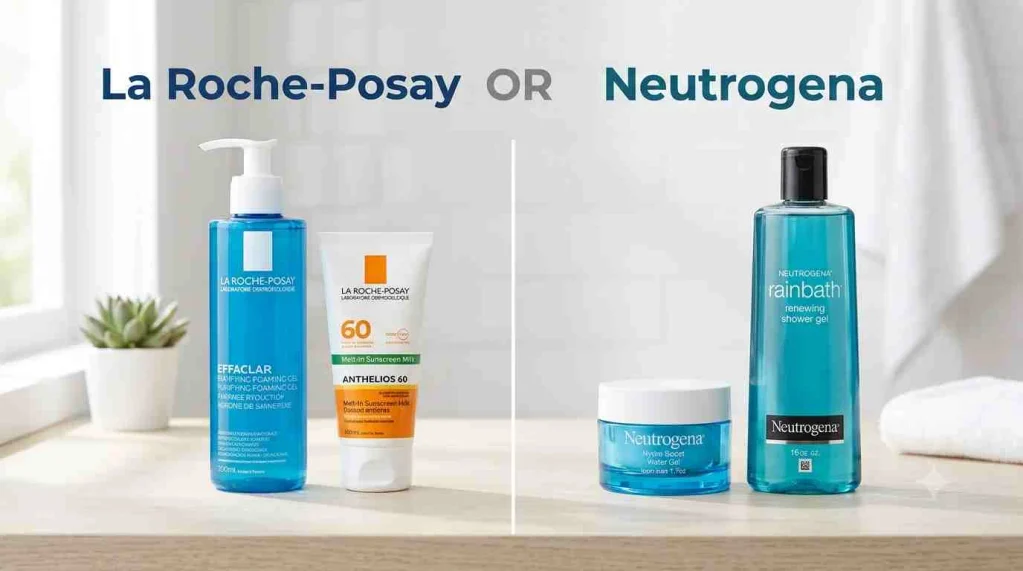
I am a college student. Are La Roche-Posay products better for acne-prone skin than Neutrogena? For a college student dealing with breakouts, choosing skincare can feel surprisingly complicated. There are countless cleansers, acne treatments, moisturizers, and sunscreens on store shelves, and two familiar names that often come up are La Roche-Posay and Neutrogena.
So, if you’re wondering, “I am a college student. Are La Roche-Posay products better for acne-prone skin than Neutrogena?”, the short answer is: not necessarily. Both brands offer products designed for acne-prone skin, but the better choice depends on your specific acne concerns, skin sensitivity, routine, and budget.
La Roche-Posay’s Effaclar line includes acne-focused products containing ingredients such as salicylic acid and benzoyl peroxide. Neutrogena also offers a broad range of acne products, including salicylic acid cleansers, benzoyl peroxide treatments, and adapalene products.
Instead of choosing a brand based only on its reputation, it makes more sense to compare the ingredients and products that fit your skin.
What Makes a Skincare Product Good for Acne-Prone Skin?
Acne-prone skin does not automatically need the most expensive skincare available. What matters more is whether a product contains appropriate acne-fighting ingredients and whether your skin can tolerate the formula.
Common ingredients used in acne skincare include:
Salicylic Acid
Salicylic acid is a beta hydroxy acid that helps exfoliate inside pores. It can be particularly useful for blackheads, clogged pores, and mild breakouts.
Both La Roche-Posay and Neutrogena have acne products featuring salicylic acid. Neutrogena’s current acne range, for example, includes multiple salicylic-acid products.
Benzoyl Peroxide
Benzoyl peroxide is commonly used for inflammatory acne and pimples. It works differently from salicylic acid and can be useful when acne involves red, inflamed lesions.
La Roche-Posay currently offers an Effaclar treatment containing 5.5% micronized benzoyl peroxide, while Neutrogena has several benzoyl-peroxide acne treatments, including products with different strengths.
Adapalene
Adapalene is a topical retinoid used to treat acne and help prevent clogged pores. It is available without a prescription in the United States at 0.1% strength.
Neutrogena currently offers an adapalene 0.1% acne treatment, giving it an option for people looking for a retinoid-based acne product.
La Roche-Posay vs. Neutrogena for Acne: What Is the Difference?
The biggest difference is not simply that one brand is “better.” Each company offers multiple products, and individual formulas can target different concerns.
La Roche-Posay’s Effaclar collection is specifically positioned around oily and acne-prone skin. Its current U.S. lineup includes treatments with salicylic acid and benzoyl peroxide, along with products intended for cleansing and moisturizing.
Neutrogena has a broader acne portfolio, including cleansers, spot treatments, moisturizers, patches, salicylic-acid products, benzoyl-peroxide products, and adapalene.
That means your decision should start with the type of acne and skin concerns you are trying to address, rather than the logo on the bottle.
When La Roche-Posay May Make Sense
La Roche-Posay may appeal to college students who want an acne-focused routine with an emphasis on formulas designed for sensitive or acne-prone skin.
For example, the current Effaclar BPO Multi-Target Acne Treatment contains 5.5% micronized benzoyl peroxide and is marketed for acne-prone, oily, and sensitive skin. The manufacturer recommends starting gradually because benzoyl peroxide can cause dryness or peeling.
This can make an Effaclar product worth considering if your main concern is inflammatory acne and you want a dedicated benzoyl-peroxide treatment.
However, “dermatologist tested” or “sensitive-skin friendly” does not mean a product will work perfectly for every person. Acne treatments can still cause irritation, particularly when several active ingredients are introduced at once.
When Neutrogena May Make Sense
Neutrogena can be especially practical for students who want a wide selection of acne treatments at different price points and in different formats.
Its current acne range includes salicylic acid cleansers, benzoyl peroxide treatments, acne patches, moisturizers, and adapalene.
Its newer Evenly Clear range also combines acne-focused ingredients with products designed to address the appearance of post-acne marks. For example, the Evenly Clear Acne Cleanser uses salicylic acid, while its gel moisturizer combines salicylic acid with N-acetyl glucosamine.
For a college student who wants to keep a routine simple and accessible, having several types of products within one brand can be convenient.
Which Is Better for a College Student on a Budget?
Budget is an important part of skincare, especially for students.
A successful acne routine does not need to contain an entire shelf of products. In many cases, a simple routine can include:
- A gentle cleanser
- One appropriate acne treatment
- A moisturizer
- A broad-spectrum sunscreen
Buying multiple active treatments at the same time can increase both the cost and the chance of irritation.
Rather than automatically choosing a premium-priced product, compare the active ingredient, concentration, formulation, and how frequently you need to use it.
A less expensive product that you can use consistently may be more practical than an expensive product that irritates your skin or sits unused in your bathroom.
What If Your Skin Is Both Acne-Prone and Sensitive?
This is where choosing based on the brand alone becomes particularly unreliable.
Acne-prone skin can also be sensitive, dry, or easily irritated. Strong acne ingredients may cause redness, dryness, burning, or peeling if introduced too aggressively.
For example, La Roche-Posay’s instructions for its 5.5% benzoyl peroxide treatment specifically advise starting with one application daily and reducing frequency if bothersome dryness or peeling develops.
The same general principle applies regardless of brand: introduce active ingredients gradually and avoid building a complicated routine immediately.
A gentle cleanser and moisturizer can help support your routine while an acne treatment I am a college student. Are La Roche-Posay products better for acne-prone skin than Neutrogena? does the targeted work.
A Simple Acne Routine for College Students
College life often means late nights, changing schedules, stress, and limited time. A complicated 10-step skincare routine may therefore be difficult to maintain.
A straightforward routine may be easier to follow.
Morning
Start with a gentle cleanser if you need one. Follow with moisturizer and broad-spectrum sunscreen.
If your morning acne treatment contains an active ingredient that can increase irritation, follow the product’s directions carefully.
Evening
Cleanse your face to remove sunscreen, makeup, sweat, and daily buildup.
Then use your chosen acne treatment according to its instructions. Finish with moisturizer.
The key is consistency rather than constantly changing products.
Should You Use La Roche-Posay and Neutrogena Together?
You can potentially use products from both brands, but there is no inherent advantage to mixing brands.
The more important question is whether the products contain overlapping active ingredients.
For example, using several exfoliating or acne-fighting products simultaneously can increase irritation. A routine containing a salicylic acid cleanser, benzoyl peroxide treatment, and adapalene may be more aggressive than necessary for someone just beginning acne treatment.
Instead of asking whether you should use both brands, consider asking:
Which active ingredients does my skin actually need?
Once you answer that question, you can select products from either brand.
What About Acne Marks After Breakouts?
Acne and post-acne marks are related but different concerns.
Some products are designed to address acne itself, while others focus on the appearance of discoloration or uneven texture left behind after breakouts.
Neutrogena’s Evenly Clear range, for example, includes products positioned around both acne and the appearance of post-acne marks.
Regardless of the brand, daily sunscreen is important because sun exposure can make certain forms of discoloration more noticeable or persistent.
What Should College Students Look for on the Label?
Instead of focusing primarily on marketing claims, look at the active ingredients.
If your concern is clogged pores and blackheads, salicylic acid may be worth considering.
If you’re dealing with red, inflamed pimples, benzoyl peroxide may be an option.
If you have persistent acne and want a retinoid treatment, adapalene is another commonly used option.
Also look for practical characteristics such as whether the product is suitable for your skin type, whether the formula feels comfortable, and whether you can realistically afford to replace it.
A product that works with your lifestyle is more useful than one that sounds impressive but is difficult to use consistently.
Common Mistakes to Avoid
Changing Products Too Frequently
Trying a new product every few days makes it difficult to understand what is helping or irritating your skin.
Give your routine time unless you experience significant irritation or another reason to stop.
Using Too Many Acne Actives
More acne medication does not necessarily mean faster improvement.
Combining multiple exfoliating acids and acne treatments can cause excessive dryness and irritation.
Skipping Moisturizer
Some people with oily or acne-prone skin avoid moisturizer because they assume hydration will make breakouts worse.
However, acne treatments can be drying. A suitable moisturizer can make a routine more comfortable and easier to maintain.
Ignoring Sunscreen
Acne-prone skin still needs sun protection. Look for a sunscreen that feels comfortable enough to use consistently and is appropriate for your skin.
So, Is La Roche-Posay Better Than Neutrogena for Acne-Prone Skin?
There is no universal winner.
La Roche-Posay may be worth considering if you are particularly interested in its Effaclar acne-focused products, including formulations featuring salicylic acid or benzoyl peroxide. Neutrogena may be attractive if you want a broad selection of acne products, including salicylic acid, benzoyl peroxide, and adapalene options.
The better choice depends on your acne type, skin sensitivity, preferred ingredients, budget, and how well your skin tolerates the specific formula.
For a college student, the smartest approach is usually not to build a complicated routine around a brand name. Start with a simple, consistent routine and choose an acne treatment that matches your particular concern.
If acne is painful, severe, scarring, worsening, or not improving with appropriate over-the-counter care, a dermatologist can help determine whether a different treatment is appropriate.
Frequently Asked Questions
Is La Roche-Posay good for acne-prone skin?
La Roche-Posay offers products specifically formulated for acne-prone and oily skin, including products in its Effaclar range containing salicylic acid and benzoyl peroxide. Whether a particular product is suitable depends on your skin and the type of acne you have.
Is Neutrogena good for acne-prone skin?
Yes. Neutrogena has a large acne-focused product range that includes salicylic acid cleansers, benzoyl peroxide treatments, adapalene, moisturizers, and other acne products.
Which is cheaper, La Roche-Posay or Neutrogena?
Prices vary by product, size, retailer, and formulation. Rather than comparing the brands generally, compare similar products with the same type of active ingredient and similar usage.
Can college students use La Roche-Posay acne products?
Many acne products are intended for adolescents and adults, but the appropriate product depends on the specific formulation and individual skin. Always follow the product’s directions and warnings.
Is salicylic acid or benzoyl peroxide better for acne?
Neither is universally better. Salicylic acid can be useful for clogged pores and certain types of mild acne, while benzoyl peroxide is commonly used for inflammatory acne. The appropriate choice depends on the type and severity of your breakouts.
Can I use Neutrogena and La Roche-Posay together?
You can use products from both brands, but mixing brands is not necessary. Pay attention to overlapping active ingredients so you do not unintentionally create an overly irritating routine.
Should acne-prone skin use moisturizer?
Yes. Acne treatments can cause dryness and irritation, so a suitable moisturizer can help make a routine more comfortable. Choose a product that works well with your skin type.
How long should I try an acne routine?
Acne generally requires consistency rather than frequent product switching. Follow the directions for the specific treatment and seek professional advice if your acne is persistent, severe, painful, or causing scars.
Is expensive skincare better for acne?
Not automatically. The active ingredient, formulation, tolerability, and consistency of use matter more than price alone.
What is the simplest skincare routine for a college student with acne?
A practical starting point is a gentle cleanser, an appropriate acne treatment, moisturizer, and sunscreen. Keeping the routine simple can make it easier to maintain consistently.
Conclusion
For a college student asking whether La Roche-Posay products are better for acne-prone skin than Neutrogena, the answer comes down to the I am a college student. Are La Roche-Posay products better for acne-prone skin than Neutrogena?, not simply the brand.
Both companies offer legitimate acne-focused options. La Roche-Posay’s Effaclar range includes treatments featuring ingredients such as salicylic acid and benzoyl peroxide, while Neutrogena offers an extensive selection that includes salicylic acid, benzoyl peroxide, and adapalene products.
For students, a simple and affordable routine that you can follow consistently is often more practical than an expensive or complicated regimen. Start by identifying your primary acne concern, choose an appropriate active ingredient, introduce it gradually, and give your routine time to work.
If your acne is persistent or severe, professional dermatology advice can help you move beyond trial and error and find a treatment approach suited to your skin.







1 thought on “I am a college student. Are La Roche-Posay products better for acne-prone skin than Neutrogena?”
Comments are closed.