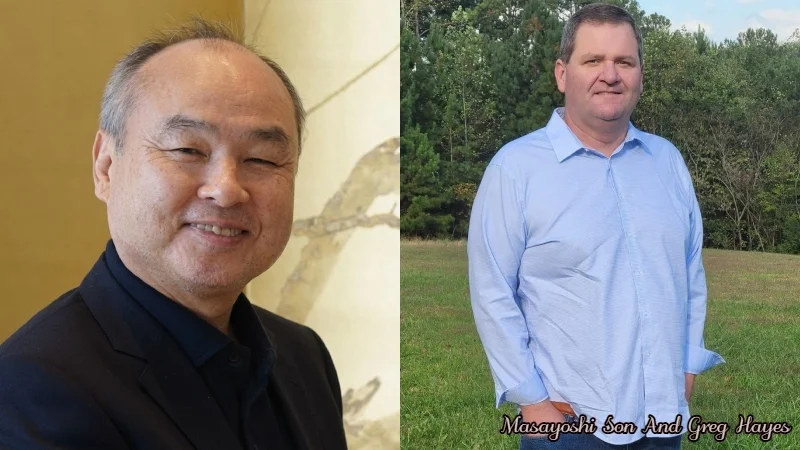
The business world is shaped by leaders who make consequential decisions about investment, technology, manufacturing, and long-term growth. Masayoshi Son and Greg Hayes are two executives whose careers illustrate how different leadership approaches can influence major corporations. Although they are associated with separate industries, both have played important roles in shaping large organizations and navigating complex business environments.
Masayoshi Son is best known as the founder and longtime leader of SoftBank Group, a Japanese investment holding company with interests in telecommunications, semiconductors, and artificial intelligence. Greg Hayes, formally Gregory J. Hayes, is an American business executive known for his leadership at United Technologies Corporation and RTX, a major aerospace and defense company.
Their names may appear together in searches about corporate leadership, business strategy, and technology-driven growth. However, it is important to distinguish a comparison of their careers from a documented professional relationship. There is no established public evidence that Son and Hayes are business partners or have worked together directly.
Understanding their individual backgrounds offers a useful perspective on how executives approach corporate transformation, risk management, and strategic investment.
Who Is Masayoshi Son?

Masayoshi Son
Founder, Chairman and CEO of SoftBank Group
Masayoshi Son is a Japanese entrepreneur and investor who founded SoftBank in September 1981. Under his leadership, the company expanded from a software distribution business into a major international technology investment group.
Son’s career has been defined by his willingness to invest in technologies that he believes will shape the future. Rather than concentrating on a single product or industry, he has repeatedly repositioned SoftBank around major technological shifts.
From Software Distribution to Global Technology Investment
SoftBank began by distributing packaged computer software in Japan. As personal computing and internet adoption accelerated, the business expanded into new markets and developed a broader international presence.
Son later became associated with significant investments in internet companies, telecommunications businesses, and semiconductor technology. SoftBank’s investment in Alibaba and its acquisition of British chip-design company Arm became particularly notable examples of his long-term investment approach.
The company’s development reflects Son’s belief that major technological changes create opportunities for businesses willing to commit capital before an industry reaches maturity.
That philosophy has also brought substantial risks. Technology investments can produce considerable gains, but they can also lose value when market conditions change, competition intensifies, or projected growth fails to materialize.
SoftBank’s Focus on Artificial Intelligence
Artificial intelligence has become a central part of SoftBank’s strategic direction. The company has increasingly emphasized AI-related investments, computing infrastructure, semiconductor technology, and robotics.
Arm is especially important to this strategy because its processor designs are widely used across mobile devices and other computing applications. Semiconductor technology is also relevant to the expanding demand for computing capacity associated with AI systems.
Son’s approach is based on identifying technologies that may influence several industries simultaneously. This differs from a strategy built around improving one established product line.
For investors and business observers, his career provides an example of how a company can evolve by repeatedly changing its priorities in response to technological developments.
Who Is Greg Hayes?

Gregory J. Hayes
Former RTX chairman and CEO; corporate director
Greg Hayes is an American executive with extensive experience in finance, corporate strategy, and aerospace manufacturing. He spent nearly 21 years at United Technologies Corporation before becoming its CEO in 2014 and chairman in 2016.
Hayes built his career through senior management positions in established industrial businesses. His experience differs from Son’s entrepreneurial and investment-oriented background because it centers on managing complex operations, allocating resources, and restructuring large corporations.
His Career at United Technologies
Hayes joined United Technologies in 1999 through its merger with Sundstrand Corporation. Over time, he took on increasingly senior responsibilities, including serving as chief financial officer from 2008 to 2014.
His financial background informed his approach to corporate management. Leading a major industrial organization requires more than identifying attractive markets. Executives must also manage costs, maintain product quality, oversee supply chains, allocate capital, and balance investment against operating requirements.
As CEO, Hayes helped reshape United Technologies by concentrating its portfolio on aerospace-related businesses.
The company divested Sikorsky Aircraft, acquired Rockwell Collins, and separated Otis and Carrier into independent public companies in 2020. These moves changed the structure of the business and prepared the remaining aerospace operations for a major combination.
Leadership at RTX
In April 2020, United Technologies combined its remaining aerospace businesses, including Pratt & Whitney and Collins Aerospace, with Raytheon Company. The resulting organization became Raytheon Technologies, which was subsequently renamed RTX Corporation.
Hayes led the company as it brought together businesses with different products, customers, engineering capabilities, and operating processes.
The combination created an organization serving commercial aviation, defense, and related technology markets. Integrating businesses of that scale requires coordination across manufacturing, research and development, procurement, and customer relationships.
Hayes later served as RTX’s executive chairman before stepping down from the role and the board in April 2025. His formal advisory period with the company was scheduled to end in January 2026.
His career demonstrates the challenges involved in transforming established industrial companies while maintaining the operational reliability expected by customers.
Are Masayoshi Son and Greg Hayes Connected?
The key question behind the keyword “masayoshi son and greg hayes” is whether the two executives share a personal, professional, or corporate connection.
Based on the publicly available corporate biographies and leadership records reviewed, there is no verified evidence establishing a direct business partnership or personal relationship between them.
Their careers are associated with different organizations and business priorities.
| Area | Masayoshi Son | Greg Hayes |
|---|---|---|
| Primary business association | SoftBank Group | United Technologies and RTX |
| Main professional background | Entrepreneurship and investment | Finance and corporate management |
| Industry emphasis | Technology, AI, telecommunications, semiconductors | Aerospace, aviation, defense |
| Leadership approach | Investing in emerging technologies and future markets | Restructuring businesses and managing industrial operations |
| Notable strategic work | SoftBank’s expansion and Arm acquisition | United Technologies’ restructuring and formation of RTX |
This comparison helps explain why the two names may be discussed together in business-related searches. Both have influenced major companies, but their similar levels of corporate responsibility do not establish that they have collaborated.
A confirmed relationship would require evidence such as an official partnership announcement, a shared board appointment, a documented joint investment, or reliable reporting of a business transaction involving both executives.
Without that evidence, it is more accurate to compare their professional achievements than to suggest a connection that has not been established.
Comparing Their Leadership Styles
Although Son and Hayes operate in different business environments, their careers offer useful lessons about strategic decision-making.
1. Long-Term Investment Versus Operational Transformation
Son’s approach emphasizes identifying technologies that may become important over the coming years. This can involve investing in businesses before their commercial potential is fully realized.
Such a strategy requires patience, substantial financial resources, and a willingness to accept uncertainty. The potential reward is participation in markets that could expand significantly.
Hayes’s work illustrates another route to growth. His leadership at United Technologies focused on reorganizing an established company, changing its portfolio, and combining major aerospace operations.
The distinction is between building future opportunities through investment and improving a company’s position by changing its structure and operations.
Neither approach is universally superior. The right strategy depends on a company’s financial position, industry, competitive environment, and available opportunities.
2. Different Approaches to Risk
Technology investors and aerospace executives face different forms of risk.
For Son, risks can include paying too much for an investment, misjudging the adoption of a new technology, or committing capital to businesses that take longer than expected to become profitable.
For Hayes, risks include production delays, rising manufacturing costs, complex mergers, regulatory requirements, and the need to meet demanding safety and reliability standards.
A software or AI company may be able to change its product relatively quickly. An aircraft-engine manufacturer, by contrast, must work within extensive engineering, certification, and testing requirements.
These differences shape how executives evaluate opportunities and measure success.
3. Capital Allocation as a Leadership Skill
Capital allocation is the process of deciding how a company should use its financial resources.
Son’s career illustrates the importance of selecting investments that align with a long-term technological vision. A major investment can influence a company’s financial position for years, making research and risk assessment essential.
Hayes’s career highlights capital allocation within a diversified industrial organization. Decisions about acquisitions, divestitures, research, manufacturing capacity, and debt can affect both immediate performance and future competitiveness.
For either leader, capital allocation involves trade-offs. Money committed to one project is unavailable for other opportunities, and management must evaluate both expected returns and potential downside.
4. Managing Change Across Large Organizations
Corporate transformation often creates uncertainty for employees, customers, suppliers, and investors.
When SoftBank enters a new technology market, it must determine how the investment fits its broader strategy and how to manage its exposure if conditions change.
When an industrial company restructures or completes a merger, management must coordinate personnel, systems, facilities, product portfolios, and corporate priorities.
The shared leadership lesson is that strategic decisions matter only when an organization can execute them effectively.
What Their Careers Reveal About Technology and Industry
The careers of Masayoshi Son and Greg Hayes also demonstrate how technology influences industries that appear very different at first glance.
Artificial Intelligence and Semiconductors
AI depends on computing power, specialized processors, data infrastructure, and substantial investment. These requirements create opportunities for semiconductor designers, cloud infrastructure providers, and investors willing to support technological development.
SoftBank’s interest in Arm and its broader AI strategy illustrate the importance of the underlying infrastructure required to support advanced computing.
However, technological opportunity does not automatically guarantee financial success. Demand projections, competition, energy costs, and the pace of innovation can all affect investment outcomes.
Aerospace and Advanced Engineering
Aerospace companies also rely heavily on advanced technology, although their commercial requirements differ from those of software and AI businesses.
Aircraft engines, avionics, communications equipment, and defense systems require specialized engineering and extensive testing. Development cycles can be long, and products must meet strict performance and safety requirements.
Hayes’s career at United Technologies and RTX demonstrates how corporate leadership in this environment involves managing both technological development and demanding operational obligations.
Why These Industries Matter Together
The broader connection is not necessarily a direct relationship between the two executives. Instead, their careers illustrate how modern business increasingly depends on technological capabilities, access to capital, and disciplined management.
AI infrastructure and aerospace engineering both require specialized expertise and long-term planning. Yet each industry has different customers, commercial models, and risk profiles.
Understanding those differences is more useful than assuming that prominent executives must share a business relationship simply because their names appear in the same search.
Lessons Business Owners Can Learn From Both Executives
Entrepreneurs and managers can draw practical lessons from these two careers without attempting to replicate their scale or investment resources.
Build a Strategy Around Clear Priorities
Son’s career demonstrates the importance of identifying a long-term direction. Businesses should understand which markets they want to serve, which technologies matter to their future, and what capabilities they need to develop.
A strategy should guide decisions rather than function as a collection of ambitious statements.
Understand the Economics Before Expanding
Hayes’s finance and restructuring experience highlights the importance of understanding costs, operational performance, and capital requirements.
Before acquiring a company, opening a new facility, or entering another market, managers should evaluate the financial consequences and the resources needed to execute the plan.
Treat Acquisitions as the Beginning of the Work
Buying a business does not automatically create value. The acquiring company must determine how to combine operations, retain essential employees, manage customers, and measure results.
The formation of RTX illustrates the scale of coordination required when major aerospace businesses come together.
Balance Ambition With Risk Management
A business that avoids every risk may miss valuable opportunities. However, a business that takes excessive risks can undermine its financial stability.
A more disciplined approach involves setting clear investment limits, evaluating alternative scenarios, tracking results, and maintaining the flexibility to adjust when assumptions change.
Adapt Without Losing Operational Discipline
Markets evolve, and companies often need to change. At the same time, successful adaptation requires reliable systems, clear accountability, and consistent execution.
The most useful leadership lesson from comparing these careers is that vision and operational discipline must work together.
Frequently Asked Questions
Are Masayoshi Son and Greg Hayes business partners?
There is no verified public evidence establishing a direct business partnership between Masayoshi Son and Greg Hayes. Son is associated with SoftBank Group and its technology investments, while Hayes is known for his leadership at United Technologies and RTX.
What is Masayoshi Son best known for?
Masayoshi Son is best known for founding SoftBank in 1981 and developing it into an international technology investment group. He is also associated with major investments in technology companies and SoftBank’s ownership of Arm.
What is Greg Hayes best known for?
Greg Hayes is best known for leading United Technologies and serving as the CEO and chairman of RTX. His work included corporate restructuring and the combination of United Technologies’ remaining aerospace businesses with Raytheon in 2020.
Do Masayoshi Son and Greg Hayes work in the same industry?
No. Their primary professional backgrounds differ. Son focuses on technology investment, telecommunications, semiconductors, and AI, while Hayes’s executive career centered on aerospace manufacturing and defense.
Is Greg Hayes still the CEO of RTX?
No. Christopher Calio succeeded Hayes as RTX’s president and CEO in May 2024. Hayes subsequently served as executive chairman until April 2025 and remained a special adviser through the beginning of 2026.
What is the main difference between their leadership styles?
Son is known for an investment-led approach that emphasizes emerging technologies and long-term opportunities. Hayes is known for financial management, corporate restructuring, and operational leadership in established industrial businesses.
Why are Masayoshi Son and Greg Hayes discussed together?
They can be compared because both have influenced large multinational corporations and made consequential strategic decisions. However, that comparison should not be interpreted as evidence of a direct personal or professional relationship.
What can entrepreneurs learn from their careers?
Entrepreneurs can learn to define a long-term strategy, allocate capital carefully, evaluate risks, and execute organizational changes effectively. Their careers also demonstrate that leadership methods must fit the business, industry, and competitive environment.
Conclusion
Masayoshi Son and Greg Hayes represent two distinct approaches to corporate leadership. Son built his career around entrepreneurship, technology investment, and anticipating major shifts in the global economy. Hayes developed his reputation through financial management, industrial restructuring, and leadership in the aerospace and defense sector.
Their professional experiences provide valuable examples of how executives can guide large organizations through change. One emphasizes identifying future opportunities and investing in technological growth; the other illustrates the complexity of reshaping established businesses and managing large-scale industrial operations.
Although their careers offer meaningful points of comparison, no verified public evidence establishes a direct business partnership between them. The most useful way to understand Masayoshi Son and Greg Hayes is to examine their individual achievements, the companies they led, and the different strategies they used to navigate changing business environments.
Ultimately, their careers reinforce an important principle: effective leadership depends on aligning long-term goals with sound financial decisions, appropriate risk management, and the ability to turn strategy into measurable results.