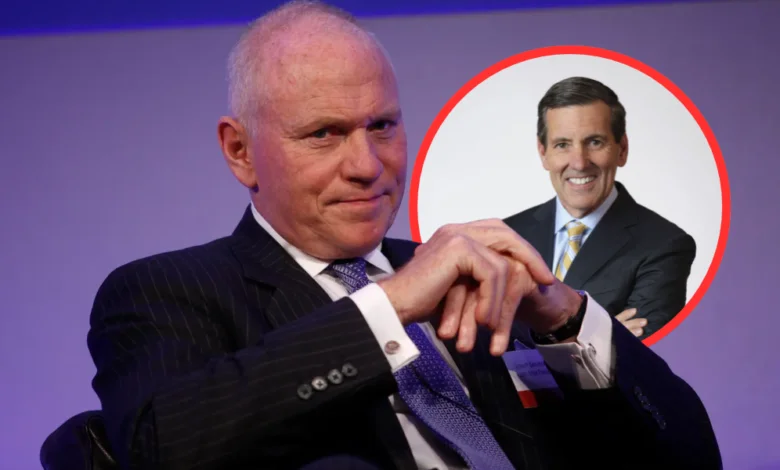
John Grayken and Bruce Broussard are associated with different areas of the American and international business landscape. Grayken is best known for founding Lone Star Funds, a global private equity investment firm, while Broussard is known for his leadership in the healthcare industry, particularly through his executive career at Humana.
Although their professional backgrounds differ, both offer useful examples of how executives build careers in complex industries, manage large organizations, and make decisions that can affect employees, investors, customers, and communities.
For readers searching for John Grayken and Bruce Broussard, an important starting point is understanding that their public profiles reflect different business models. Private equity focuses on acquiring, managing, and eventually selling investments, whereas healthcare leadership involves balancing financial performance with the delivery and administration of medical services.
Examining their careers separately provides a clearer picture of their professional achievements, leadership responsibilities, and the broader industries in which they operate. It is also important to distinguish verified professional information from assumptions about any direct relationship between the two individuals.
Who Is John Grayken?
John Grayken is an investor and business executive best known for founding Lone Star Funds, an investment firm that operates across private equity, credit, and real estate. His career illustrates how investors can build international businesses by identifying assets that require restructuring, financial investment, or operational improvement.
The founding of Lone Star Funds
Grayken established the firm’s first fund in 1995, initially focusing on distressed commercial real estate debt and equity investments in North America. Over time, the firm expanded into additional markets and investment categories.
According to Lone Star’s official company information, the firm has organized 26 funds with approximately $96 billion in aggregate capital commitments. These figures reflect the scale of the firm’s investment platform, rather than Grayken’s personal wealth.
The firm’s strategy centers on identifying investment opportunities in complicated or undervalued markets. Such opportunities can arise during economic downturns, periods of financial stress, or industry transitions.
Understanding Grayken’s investment approach
Private equity firms generally seek to generate returns by acquiring investments, improving their financial or operational position, and eventually selling them or otherwise realizing their value.
This process can involve several activities:
- Financial analysis: Evaluating an asset’s financial condition, liabilities, and potential returns.
- Operational improvement: Identifying opportunities to strengthen management, efficiency, or business performance.
- Risk management: Assessing market conditions, financing costs, regulatory requirements, and other potential obstacles.
- Long-term planning: Determining how an investment might perform under different economic scenarios.
These are common features of private equity investing, not a claim that every Lone Star transaction follows an identical process.
The international dimension of Grayken’s career
Lone Star’s growth reflects the international nature of modern investment management. Its historical activities have included investments in North America, Europe, and Asia, demonstrating how private equity firms may pursue opportunities across different economies and asset classes.
Operating internationally also introduces additional challenges. Investors must consider local laws, taxation, currency fluctuations, financing structures, and differences in business practices.
Grayken’s career is therefore relevant to discussions about institutional investing, distressed assets, and the development of global investment firms.
Who Is Bruce Broussard?
Bruce Broussard is a corporate executive whose career has focused primarily on healthcare, financial management, business transformation, and executive leadership.
He became widely known through his work at US Oncology, McKesson, and Humana. In February 2026, HP Inc. appointed him interim chief executive officer after he had served on the company’s board of directors since 2021.
His career offers a different perspective from Grayken’s because it emphasizes the management of operating companies rather than the creation and oversight of a private equity investment platform.
Leadership at US Oncology and McKesson
Before joining Humana, Broussard held several senior positions at US Oncology, including chief financial officer, chief executive officer, and chairman of the board.
After McKesson acquired US Oncology, Broussard became president of McKesson’s Specialty Pharmacy Division. These positions gave him experience with healthcare operations, financial management, and the integration of businesses within a larger corporate organization.
The experience is significant because healthcare businesses must navigate complex relationships among providers, patients, insurers, pharmaceutical companies, and regulators.
Executives in this environment need to understand financial performance while also considering patient access, service quality, compliance, and operational reliability.
Broussard’s tenure at Humana
Broussard joined Humana in 2011, became president in 2011, and served as chief executive officer from 2013 through 2024. During his tenure, the company continued developing an integrated approach to healthcare services, with a strong emphasis on senior care.
Humana’s business operates within a healthcare system shaped by insurance coverage, government programs, medical costs, and changing patient needs.
Leading a company in this environment requires more than conventional financial oversight. Executives must consider how technology, clinical services, administrative processes, and relationships with healthcare providers affect the overall experience of members.
Broussard’s experience is particularly relevant to the broader discussion of healthcare transformation: how large organizations can adapt their services while managing costs and responding to changing expectations.
His move to HP Inc.
Broussard’s appointment as interim CEO of HP Inc. in February 2026 marked a significant transition from healthcare leadership to a global technology business.
HP announced that he would lead the company while its board conducted a search for a permanent CEO. The company cited his experience in business management, operations, and financial leadership.
The move demonstrates how executive skills can transfer between industries. Financial discipline, strategic planning, organizational management, and board-level decision-making are relevant to many large companies, even when their products and customers differ.
However, leading a technology company presents its own challenges, including changing customer demand, product development cycles, global supply chains, and competition in personal computing and related markets.
John Grayken and Bruce Broussard: Key Differences
Although both men have held senior positions in major business environments, their professional responsibilities and career paths are distinct.
| Category | John Grayken | Bruce Broussard |
|---|---|---|
| Primary field | Private equity and investment management | Corporate leadership, healthcare, and technology |
| Best known for | Founding Lone Star Funds | Leading Humana and later becoming interim CEO of HP |
| Main professional focus | Investment opportunities and asset management | Business operations and organizational leadership |
| Notable organization | Lone Star Funds | Humana, McKesson, and HP Inc. |
| Leadership perspective | Investor and investment-firm chairman | Operating-company executive |
The comparison highlights two different ways to create business value. An investment-firm founder evaluates opportunities across multiple assets and markets. An operating-company executive is responsible for the performance, strategy, and execution of a particular organization.
Neither role is inherently more important than the other. Their effectiveness depends on the business model, objectives, market conditions, and decisions involved.
Are John Grayken and Bruce Broussard Business Partners?
There is no established public evidence in the corporate biographies and company records reviewed for this article that John Grayken and Bruce Broussard are direct business partners.
Grayken’s documented professional background centers on Lone Star Funds and Hudson, while Broussard’s career includes US Oncology, McKesson, Humana, and HP Inc. Their published professional histories do not establish a shared executive position or a direct business partnership.
This distinction matters because the appearance of two names together in a search query does not necessarily indicate a formal relationship.
Business connections can take many forms, including shared board memberships, joint investments, acquisitions, employment relationships, and advisory arrangements. A reliable assessment requires evidence of the particular connection being claimed.
It would be inaccurate to describe the two men as collaborators or business associates without supporting documentation. At the same time, the absence of a documented relationship does not establish that they have never met or interacted privately.
For readers researching the phrase “John Grayken and Bruce Broussard,” the most useful approach is to examine their independently documented careers first and distinguish verified facts from speculation.
What Their Careers Reveal About Business Leadership
The careers of Grayken and Broussard provide several useful lessons for readers interested in investment management and corporate strategy.
1. Financial discipline matters across industries
Financial discipline plays a central role in both investment management and corporate operations.
Investors must evaluate potential returns against risk, while corporate executives must allocate resources among competing priorities. Both responsibilities require careful analysis, realistic assumptions, and an understanding of how economic changes affect business performance.
A strong financial strategy is not simply about reducing costs. It also involves determining where investment can create sustainable value.
2. Leadership depends on the business model
The responsibilities of an investment-firm chairman differ from those of a corporate CEO.
An investment leader may assess opportunities across several companies and industries. An operating-company leader must coordinate employees, systems, customers, and day-to-day execution within a specific business.
Understanding this distinction helps explain why professional experience cannot always be transferred directly from one position to another. Different roles demand different combinations of financial judgment, operational expertise, and industry knowledge.
3. Adaptability supports long-term relevance
Both private equity and healthcare have experienced substantial changes in technology, regulation, financing, and market expectations.
The technology sector presents another set of challenges, including product innovation, global competition, and evolving customer preferences.
Executives who recognize these changes and adapt their strategies are better positioned to respond to uncertainty. Nevertheless, adaptability alone does not guarantee success; decisions must also be supported by sound analysis and effective execution.
4. Accountability extends beyond financial results
Large organizations influence more than their shareholders or investors. Their decisions can affect employees, customers, suppliers, communities, and other stakeholders.
In healthcare, these considerations can include access to services and the quality of patient experiences. In private equity, they may include the consequences of acquisitions, restructuring, financing decisions, and changes in company operations.
Evaluating business leadership therefore requires looking beyond financial performance alone. Governance, transparency, regulatory compliance, and the consequences of strategic decisions also matter.
Frequently Asked Questions
Who is John Grayken?
John Grayken is the founder and chairman of Lone Star Funds, a global investment firm specializing in private equity, credit, and real estate. He established the firm’s first fund in 1995.
Who is Bruce Broussard?
Bruce Broussard is a senior corporate executive who served as Humana’s CEO from 2013 through 2024. In February 2026, he became interim CEO of HP Inc.
Are John Grayken and Bruce Broussard related?
Their publicly documented professional biographies do not establish a family relationship. It would be inappropriate to claim that they are related without reliable supporting evidence.
Did Bruce Broussard work for John Grayken?
No publicly documented employment relationship between Broussard and Grayken has been established in the company biographies reviewed for this article.
What is John Grayken best known for?
Grayken is best known for founding Lone Star Funds and developing its international investment platform. The firm invests across private equity, credit, and real estate.
What is Bruce Broussard known for?
Broussard is known primarily for his executive leadership at Humana and his earlier roles at US Oncology and McKesson. He subsequently became interim CEO of HP Inc. in 2026.
What industries are associated with John Grayken and Bruce Broussard?
Grayken is associated primarily with private equity, credit, real estate, and investment management. Broussard’s experience spans healthcare, specialty pharmacy, corporate management, and technology leadership.
Why are their names searched together?
The exact reason for an individual search cannot be determined from the keyword alone. Readers may be looking for a comparison of their careers or checking whether a business relationship exists. Their names appearing together does not establish that they have a direct connection.
What can business professionals learn from their careers?
Their careers illustrate the importance of financial discipline, strategic planning, industry knowledge, organizational leadership, and adaptability. They also show how leadership responsibilities vary between investment firms and operating companies.
Where can readers verify information about their careers?
Official corporate biographies and company announcements are useful starting points. Lone Star Funds publishes information about Grayken and the firm’s history, while HP Inc. and Marsh McLennan provide professional information about Broussard.
Conclusion
John Grayken and Bruce Broussard represent two distinct paths through the business world. Grayken built his reputation in private equity and investment management through Lone Star Funds, while Broussard developed his career through senior leadership positions in healthcare and technology.
Their experiences offer useful insights into investment strategy, corporate governance, financial discipline, and the demands of leading complex organizations.
For readers researching both individuals, the most important distinction is between their documented achievements and any assumed connection between them. Available corporate information establishes their separate professional histories but does not establish a direct business partnership.
Understanding those differences provides a more accurate foundation for exploring their careers and the broader lessons they offer about modern business leadership.


1 thought on “John Grayken and Bruce Broussard Two Distinct Paths in Business Leadership”
Comments are closed.