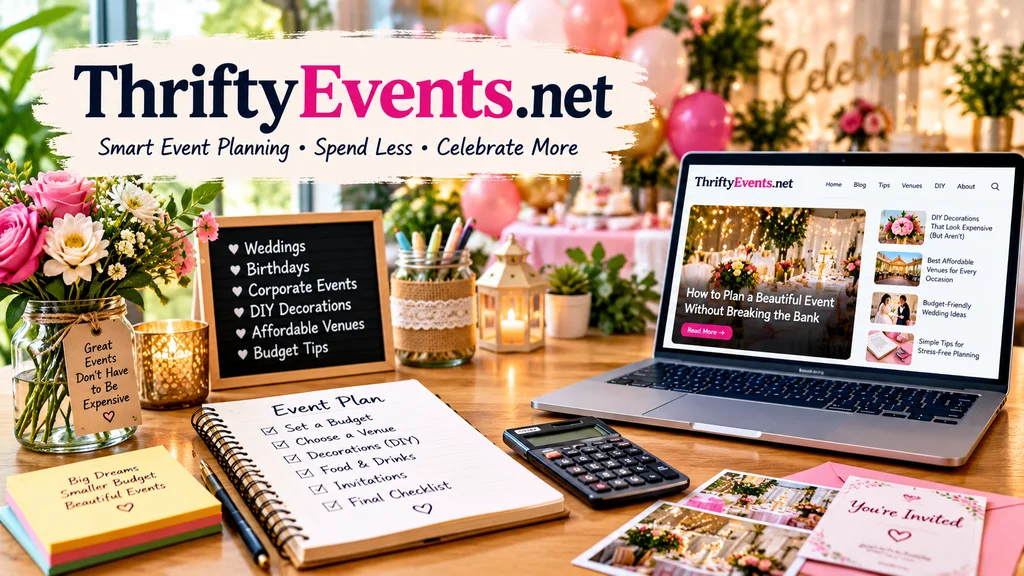
Posts#thriftyevents net Planning an event can become expensive surprisingly quickly. Venue fees, food, decorations, entertainment, transportation, and last-minute purchases can all push a simple gathering beyond its original budget. That is why people increasingly look for practical event-planning content that focuses on value rather than unnecessary spending.
Searches for posts#thriftyevents net appear to be connected with finding content and ideas related to ThriftyEvents.net and budget-conscious event planning. The broader appeal is straightforward: people want useful inspiration for creating enjoyable events while making smarter decisions about where their money goes.
Whether you are organizing a birthday party, family gathering, community event, workplace celebration, or casual get-together, the right planning information can help you avoid common mistakes and make better use of a limited budget.
What Are Posts ThriftyEvents.net About?
Content associated with ThriftyEvents.net generally centers on affordable event planning, creative ideas, budgeting, organization, and ways to create enjoyable experiences without relying on expensive extras.
For someone researching posts ThriftyEvents.net, the most useful approach is to look beyond individual ideas and focus on the planning principles behind them.
A good budget-event article should help answer practical questions such as:
- How much should the event cost?
- Where can unnecessary expenses be reduced?
- Which elements matter most to guests?
- What can be made or organized yourself?
- Where is it worth spending more?
- How can last-minute costs be avoided?
These questions are useful because a successful event is not necessarily the one with the biggest budget. It is the one where available resources are used thoughtfully.
Start With a Realistic Event Budget
Before searching for decorations, entertainment, or catering, establish a spending limit.
A simple event budget can be divided into several categories:
Venue
The location may represent one of the largest expenses. Compare traditional event venues with community centers, parks, private homes, libraries, recreational facilities, or other suitable spaces.
Always check what is included in the rental price. A venue that looks inexpensive initially may charge additional fees for cleaning, security, tables, chairs, electricity, or overtime.
Food and Drinks
Food costs can increase quickly when the guest count is uncertain.
Instead of automatically choosing a large catered menu, consider the type of event and what guests actually need. A casual afternoon gathering may require very different food arrangements from a formal evening celebration.
Decorations
Decorations can create atmosphere, but they do not need to dominate the budget.
Reusable items, simple table settings, greenery, inexpensive lighting, fabric, balloons, and handmade decorations can often create an attractive environment without requiring a major investment.
Entertainment
Entertainment should match the audience rather than simply consuming a large portion of the budget.
Music playlists, games, trivia, karaoke, photo activities, outdoor games, and group activities can provide plenty of engagement without expensive performers.
Emergency Costs
A small reserve is one of the smartest parts of an event budget.
Unexpected transportation, replacement supplies, extra food, weather-related changes, or equipment problems can create expenses at the worst possible moment. Keeping some money aside gives you flexibility.
Choose the Venue Before Buying Supplies
One common event-planning mistake is purchasing decorations and equipment before determining what the venue already provides.
A venue may already have tables, chairs, lighting, a sound system, kitchen access, or decorative features that reduce what you need to purchase or rent.
When evaluating a location, ask:
- What furniture is included?
- Is setup included?
- Is cleanup included?
- Are outside food and drinks allowed?
- Is there parking?
- Are there restrictions on music?
- What happens if the weather changes?
- Are there additional service fees?
The cheapest venue is not always the best value. A slightly more expensive location that includes essential equipment can ultimately cost less.
Use Posts and Planning Ideas as Inspiration, Not a Complete Plan
One reason content such as posts#thriftyevents net can be useful is that it can introduce planners to ideas they may not have considered.
However, inspiration should always be adapted to the specific event.
For example, a decoration idea designed for an outdoor birthday party may not work well for a corporate meeting. Likewise, a food strategy suitable for a family potluck may not be appropriate for a formal wedding reception.
Take the useful principle from an idea and adjust it to your:
- Guest count
- Location
- Event type
- Available time
- Local prices
- Weather
- Accessibility requirements
- Overall budget
This approach produces a more practical event than copying a plan exactly.
Save Money Without Making the Event Feel Cheap
Budget planning does not mean removing everything enjoyable.
The goal is to spend money where it has the greatest effect.
For example, instead of purchasing ten different decorative elements, you might invest in one attractive focal point. Rather than offering an enormous menu, you could provide a smaller selection of well-prepared food.
The same principle applies to entertainment.
A carefully planned activity that gets guests involved can be more memorable than an expensive option that leaves everyone sitting quietly.
Focus on Guest Experience
Think about what attendees will actually notice.
Guests are likely to care about things such as:
- Comfortable seating
- Good food
- Clear directions
- Reasonable timing
- Clean facilities
- Friendly hosting
- Interesting activities
- A comfortable environment
Not every detail needs to be elaborate.
Consider DIY Projects Carefully
DIY event planning can reduce costs, but only when the Posts#thriftyevents net project is realistic.
Making invitations, centerpieces, signs, party favors, or simple decorations yourself can be worthwhile if you have enough time.
However, a DIY project that takes ten hours to save $20 may not be a good use of your time.
Before starting a project, consider three things:
Cost: How much will the materials actually cost?
Time: How long will the project take?
Quality: Can you produce something that fits the event?
DIY should make planning easier or more personal, not create additional stress.
Look for Reusable Event Supplies
One-time purchases can become expensive when every event requires starting from scratch.
If you organize gatherings regularly, consider building a small collection of reusable supplies.
Useful examples include:
- Neutral tablecloths
- Serving trays
- String lights
- Folding signs
- Reusable containers
- Basic decorations
- Photo backdrops
- Storage boxes
- Extension cords
- Simple serving equipment
Neutral designs are particularly useful because they can be adapted to birthdays, holidays, community gatherings, and other occasions.
Over time, reusable supplies can reduce the cost of future events.
Keep Food Planning Practical
Food waste is one of the easiest ways to lose control of an event budget.
Start with a realistic estimate of attendance rather than preparing excessive quantities simply because you are worried about running out.
The menu should also reflect the event schedule.
For a short gathering, snacks and beverages may be enough. A longer event may require a full meal.
You can also reduce complexity by choosing dishes that share ingredients. This can simplify shopping, preparation, storage, and cleanup.
For larger gatherings, buffet-style service or a potluck may provide flexibility while allowing guests to contribute.
Use Digital Invitations
Traditional invitations can be attractive, but digital invitations often make sense for casual and community events.
Email, messaging platforms, event pages, and digital invitation services can make it easier to:
- Send invitations quickly
- Update event details
- Track responses
- Share directions
- Send reminders
- Reduce printing costs
For formal occasions where printed invitations are important, you can still keep the design simple and avoid unnecessary extras.
Plan Entertainment Around Participation
Entertainment does not always require a professional performer.
Activities can be designed around participation instead.
For a family event, consider games, storytelling, trivia, or a simple photo area. A workplace gathering might use team challenges or informal competitions. A community event could include demonstrations, workshops, or interactive activities.
The best choice depends on the audience.
Ask what people are likely to enjoy rather than choosing an activity simply because it looks impressive.
Compare Vendors Before Making Decisions
Even when planning a low-cost event, some services may need to be outsourced.
Catering, photography, rentals, transportation, entertainment, and venue services can all vary considerably in price.
Do not compare vendors only by the headline price.
Look at:
- What is included
- Additional fees
- Cancellation policies
- Delivery charges
- Setup and cleanup
- Experience with similar events
- Availability
- Reviews and references
A low initial quote can become expensive once additional charges are included.
Build a Simple Event Timeline
A budget can tell you how much money you have, but a timeline helps you manage your time.
For example:
Four to eight weeks before: Set the budget, choose the venue, establish the guest list, and book major services.
Two to four weeks before: Send invitations, confirm vendors, plan food, and purchase essential supplies.
One week before: Confirm attendance, check equipment, prepare decorations, and review the schedule.
One day before: Prepare food where appropriate, organize supplies, and confirm final details.
Event day: Follow the schedule while leaving enough flexibility for unexpected changes.
The exact timeline depends on the event, but the principle is universal: completing important tasks early reduces last-minute spending.
Check Event Information Before Attending
If you are using online posts to discover events rather than planning your own, verify important details before making arrangements.
Event information can change. Dates, locations, ticket availability, schedules, and venue policies may be updated after an article or listing is published.
Before attending, confirm:
- Date and time
- Exact location
- Ticket requirements
- Current pricing
- Parking or transportation
- Age restrictions
- Cancellation information
- Organizer details
This is particularly important for older posts.
A useful article can point you toward an opportunity, but the latest information should come from the relevant organizer or official event source whenever possible.
Common Budget Event Planning Mistakes
Several mistakes repeatedly cause event costs to increase.
Ignoring the Total Cost
A low venue price does not necessarily mean a low overall event cost. Consider every associated expense.
Inviting More People Than the Budget Supports
Guest numbers influence food, seating, venue size, invitations, transportation, and staffing.
Buying Decorations Too Early
Wait until you know the venue and theme before purchasing large quantities of decorative items.
Forgetting Setup and Cleanup
These tasks require time and sometimes additional labor. Include them in your planning.
Leaving Everything Until the Last Minute
Last-minute purchases often reduce your choices and increase costs.
Trying to Do Everything Yourself
DIY can save money, but some tasks are better delegated to friends, family, volunteers, or professionals.
How to Get More Value From Event-Planning Content
When browsing posts ThriftyEvents.net or similar event-planning resources, do not simply collect dozens of ideas.
Instead, organize useful information into categories.
Save ideas for:
Budgeting: Cost-control strategies and planning methods.
Venues: Alternative locations and questions to ask before booking.
Food: Affordable menus and ways to reduce waste.
Decorations: Reusable and DIY options.
Entertainment: Activities suitable for different audiences.
Organization: Timelines, checklists, and preparation strategies.
This turns scattered inspiration into a practical planning system.
Frequently Asked Questions
What are posts ThriftyEvents.net?
The phrase generally refers to posts or online content associated with ThriftyEvents.net, particularly material related to affordable event planning, budgeting, celebrations, and practical event ideas.
How can I plan an event on a small budget?
Start with a fixed budget, prioritize the elements that matter most to guests, compare vendors, consider affordable venues, reduce unnecessary decorations, and leave room for unexpected expenses.
What is the biggest event-planning expense?
It depends on the type and size of the event. Venue rental, catering, entertainment, equipment, and staffing can all represent significant expenses.
Are DIY decorations worth it?
They can be, especially when the materials are inexpensive and the project does not require excessive time. Choose DIY projects that provide meaningful savings or personalization.
How can I reduce food costs at an event?
Create a realistic guest estimate, choose a manageable menu, buy ingredients carefully, consider seasonal options, and avoid preparing significantly more food than necessary.
Should I book a venue early?
For popular venues or events with fixed dates, early planning is generally helpful because it gives you more choices and more time to compare prices and policies.
Can digital invitations reduce event costs?
Yes. For many informal events, digital invitations can reduce printing and postage expenses while making RSVP management easier.
How do I know whether an online event listing is current?
Check the date the content was published or Posts#thriftyevents net updated, then verify the event information with the organizer or official venue before attending.
What makes an event memorable?
Good organization, comfortable surroundings, enjoyable activities, thoughtful hospitality, and meaningful interaction often matter more than expensive decorations or entertainment.
Is budget event planning only suitable for small events?
No. The same principles can be applied to large gatherings. Larger events simply require more detailed budgeting, coordination, vendor management, and contingency planning.
Conclusion
The growing interest in posts#thriftyevents net reflects a broader need for practical event-planning information that helps people spend carefully without sacrificing the quality of the experience.
The most effective approach is not to cut every expense. Instead, determine which parts of an event create genuine value and direct the available budget toward them. A suitable venue, thoughtful food planning, useful entertainment, reusable supplies, and good organization can accomplish far more than a collection of expensive extras.
Whether you are planning a birthday party, community gathering, family celebration, workplace event, or another occasion, use online event content as inspiration and adapt each idea to your own circumstances. With a realistic budget and an organized plan, it is possible to create an event that feels generous, welcoming, and memorable without unnecessary spending.







1 thought on “Posts#thriftyevents net How to Find Better Ideas for Affordable Events”
Comments are closed.